

 Image 1 of 2
 Image 2 of 2
Sample Pages

Contents List
-
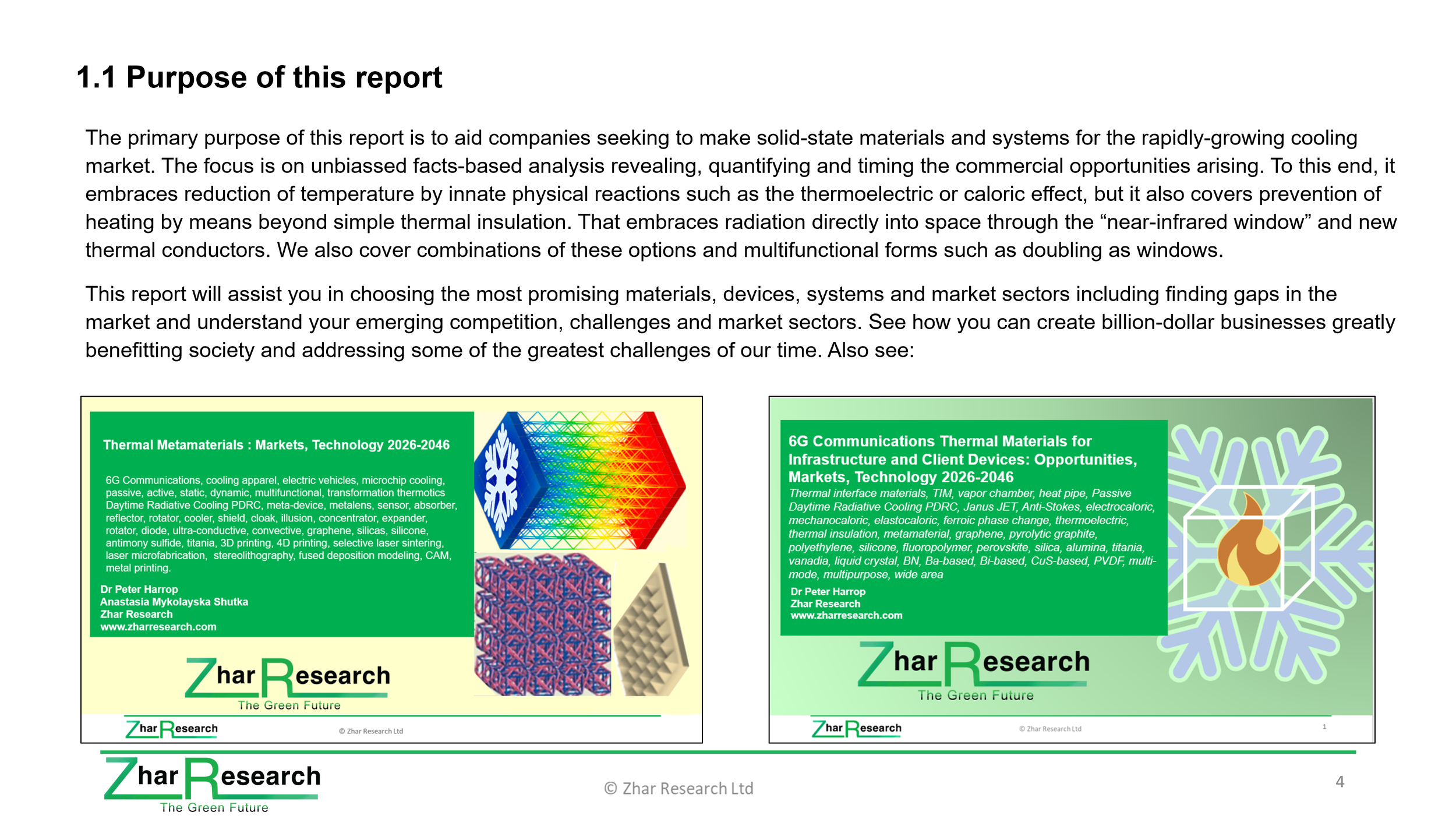
1.1 Purpose of this report
1.2 Methodology of this analysis and scope of the report
1.3 Reasons for the escalating need for cooling
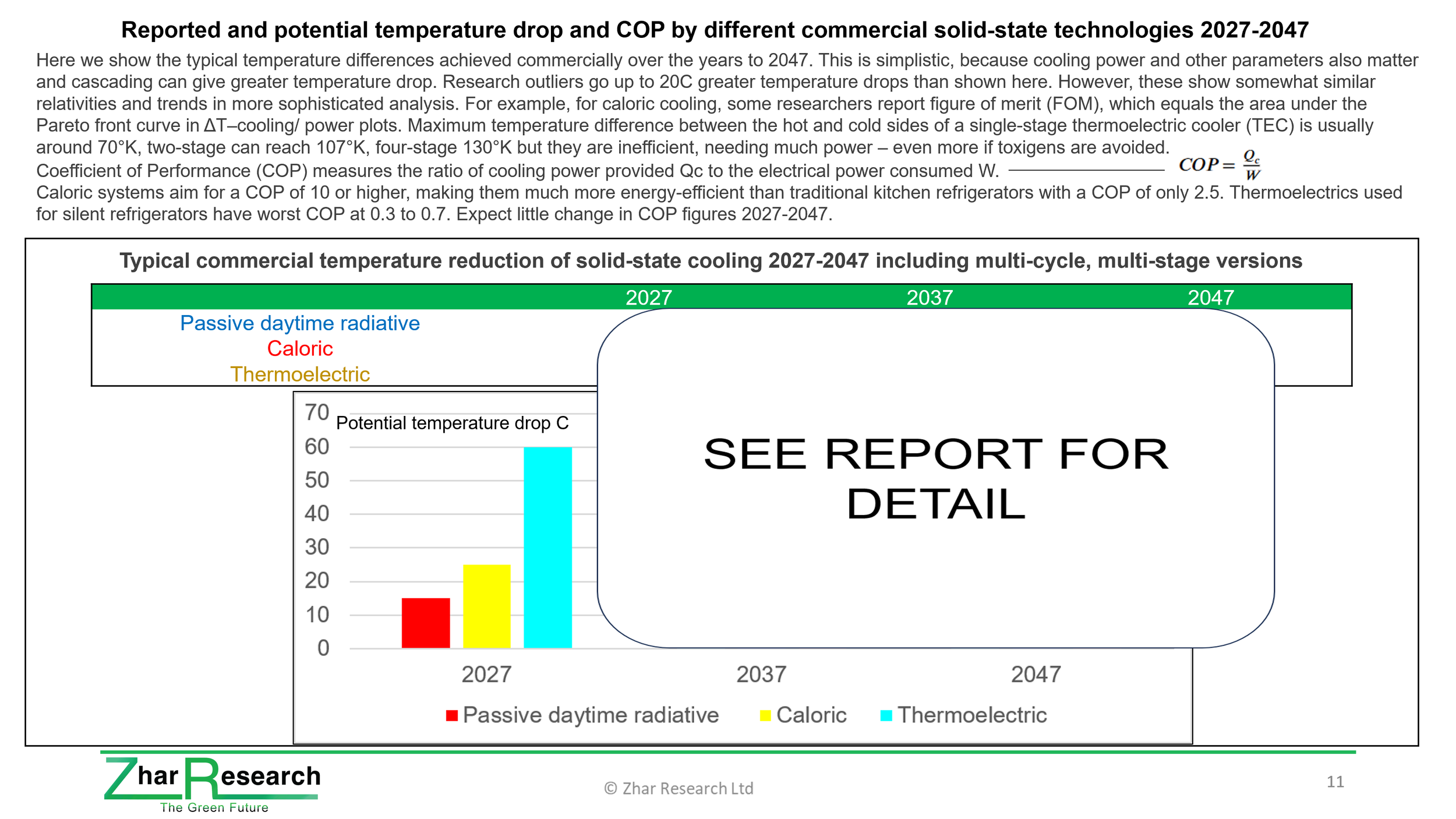
1.4 Why solid-state cooling is now a priority, analysis of research, COP, forecast cooling by type, context
1.5 24 primary conclusions
1.6 Potential for replacing vapor compression cooling, and for use in solar panel and 6G Communications cooling
1.7 Winning materials and principles for solid-state cooling generally
1.8 Company numbers commercialising solid state cooling by technology
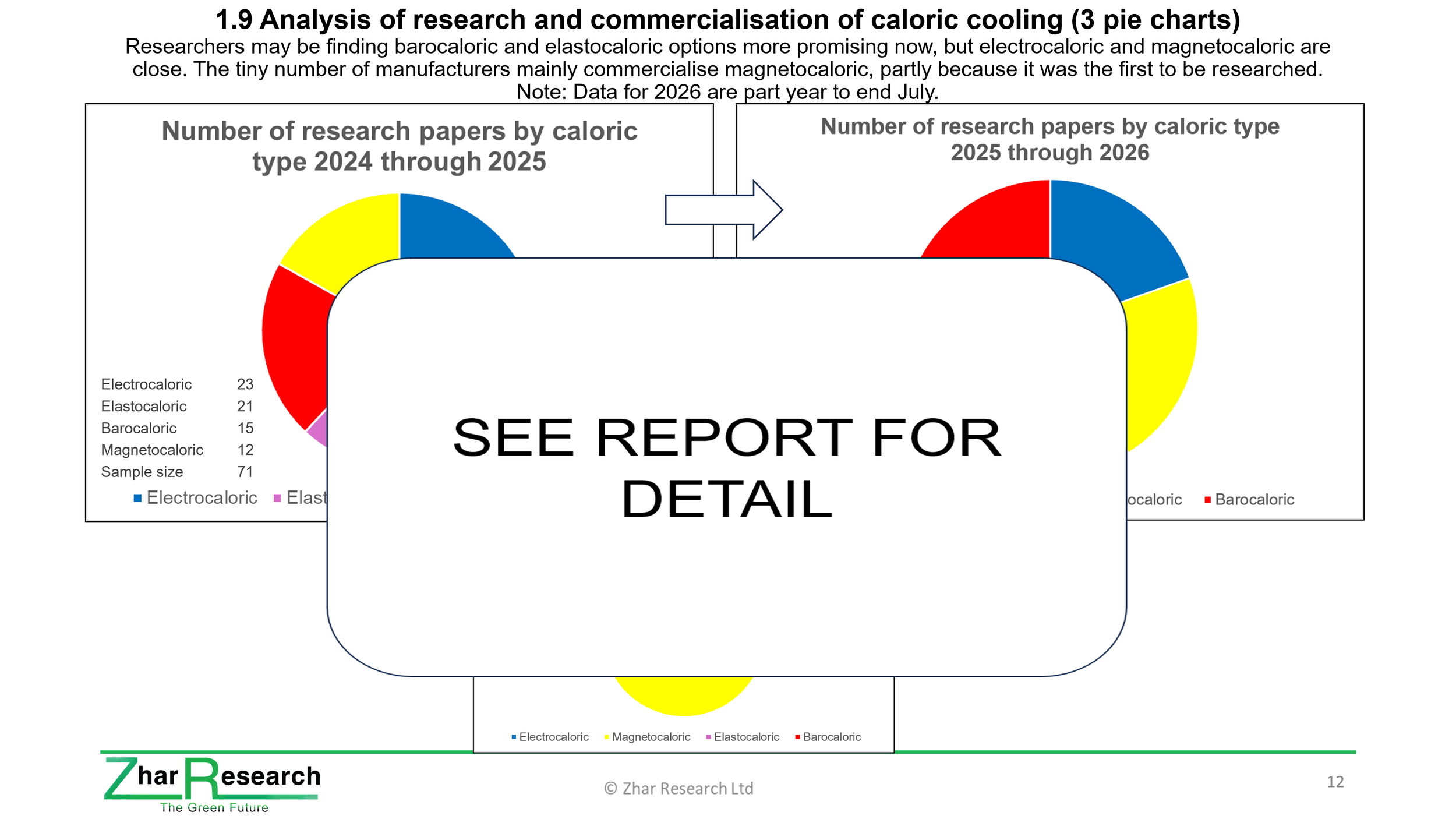
1.9 Analysis of research and commercialisation of caloric cooling (3 pie charts)
1.10 Seventeen SWOT appraisals and supporting materials analyses
1.10.1 Solid state cooling SWOT appraisal
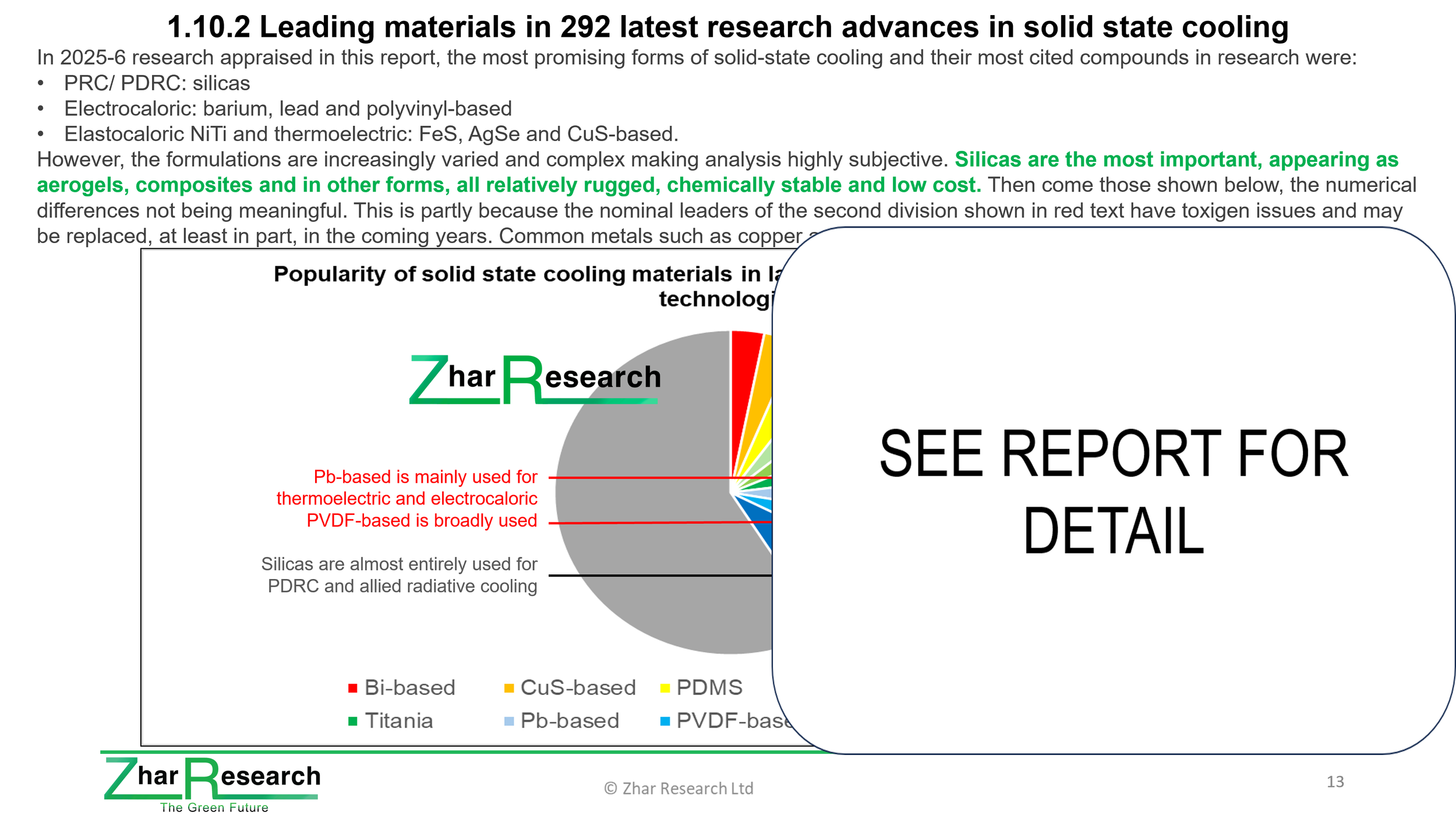
1.10.2 Leading materials in 292 latest research advances in solid state cooling
1.10.3 SWOT appraisal of PRC/ PDRC
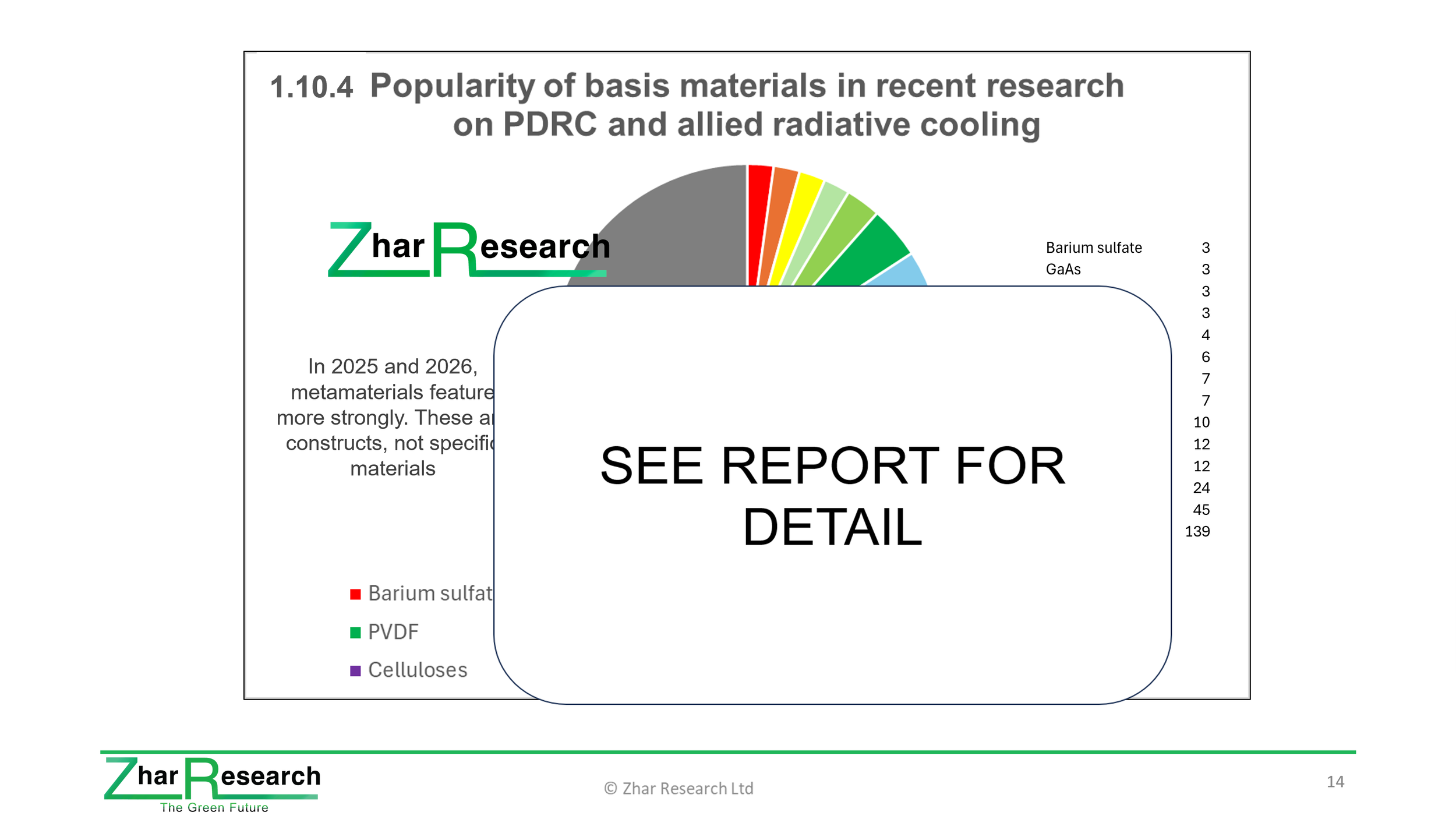
1.10.4 Popularity of basis materials in latest PRC research
1.10.5 SWOT appraisal of Janus effect for thermal management
1.10.6 SWOT appraisal of anti-Stokes fluorescence cooling
1.10.7 SWOT appraisal of thermal metamaterials which mainly support PRC
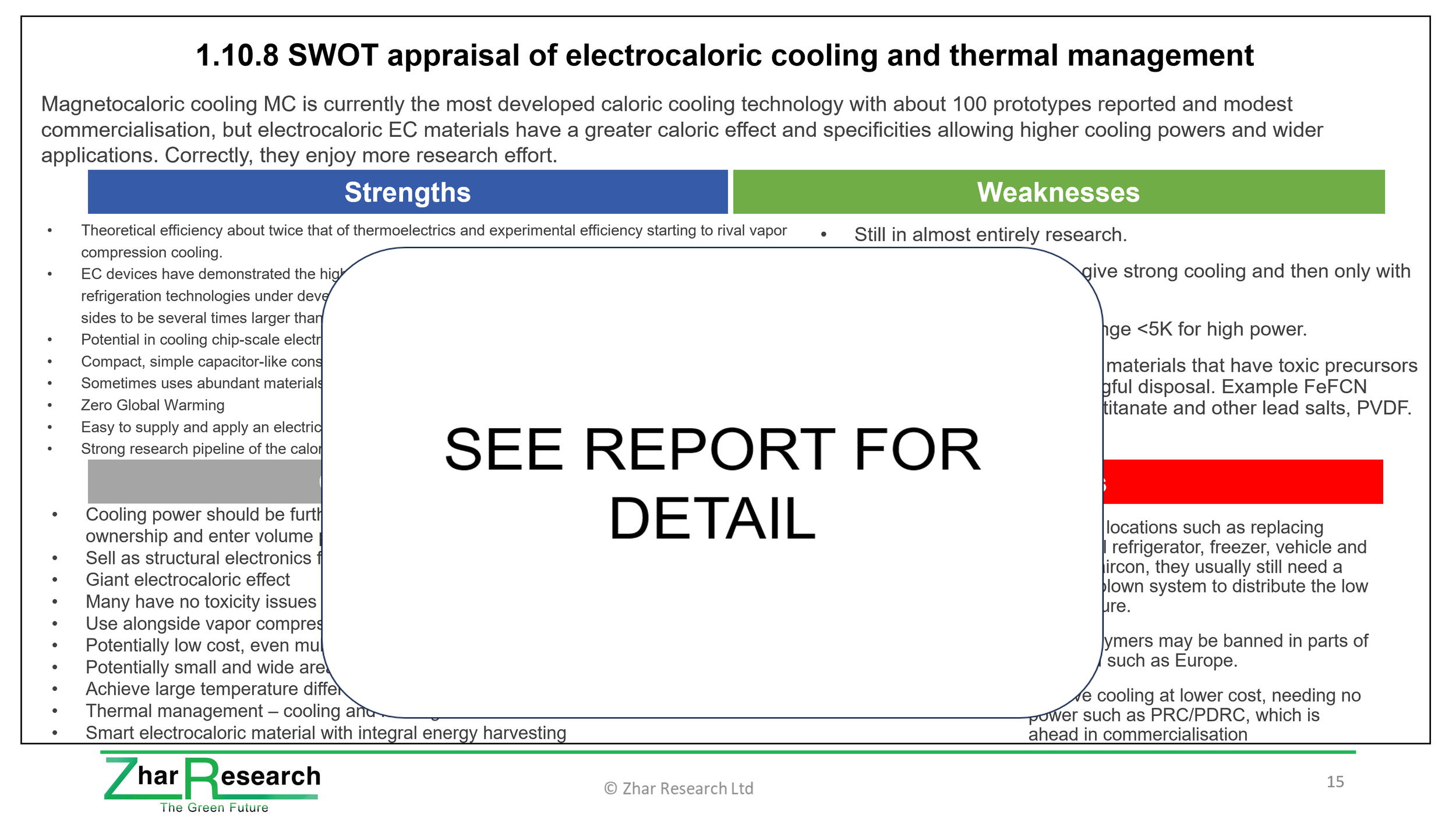
1.10.8 SWOT appraisal of electrocaloric cooling and thermal management
1.10.9 Electrocaloric materials by popularity in 35 research advances 2023 through 2026
1.10.10 SWOT appraisal of magnetocaloric cooling
1.10.11 SWOT appraisal of elastocaloric cooling
1.10.12 SWOT appraisal of barocaloric cooling
1.10.13 SWOT appraisal of thermoelectric cooling, temperature control and harvesting
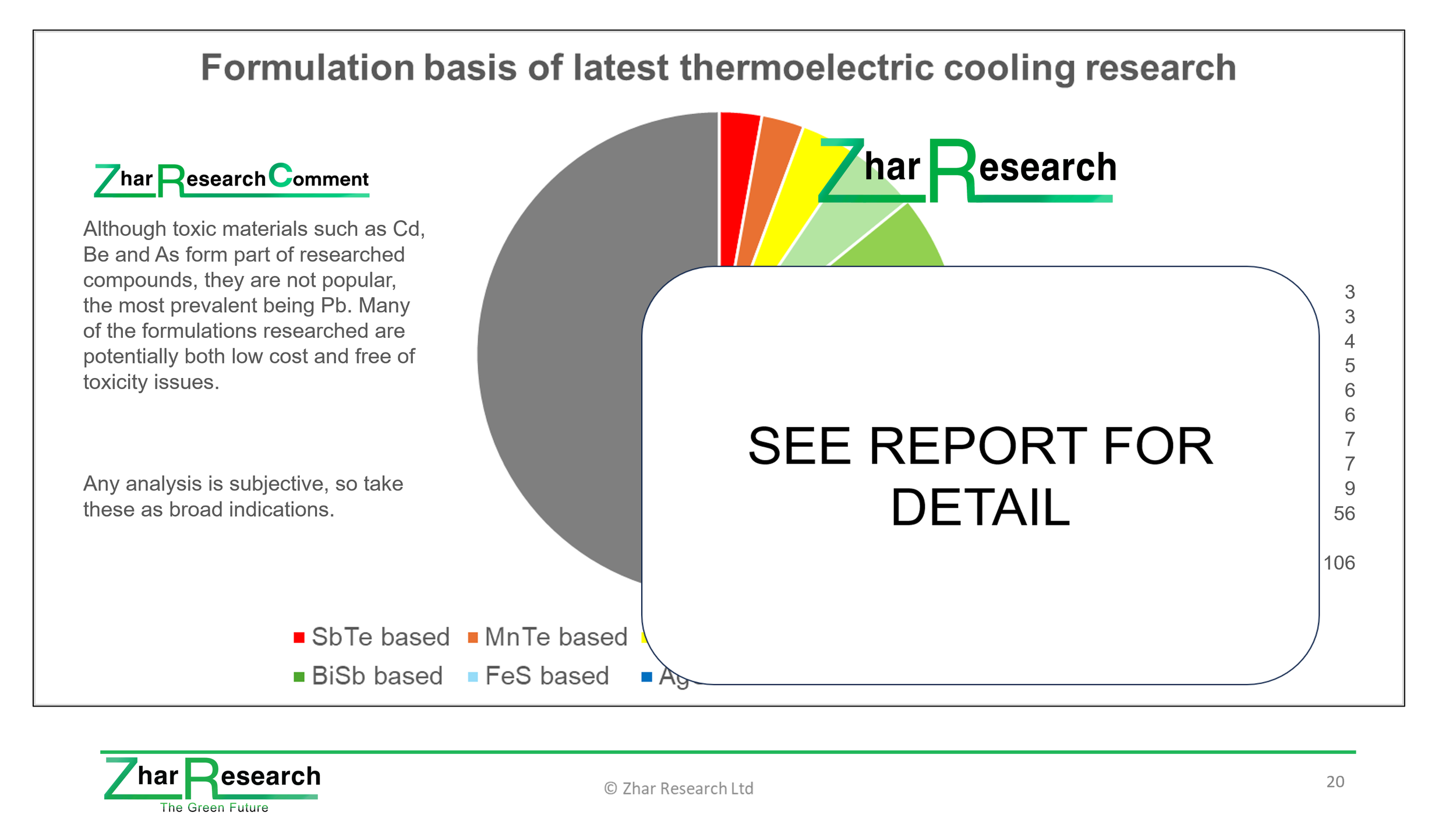
1.10.14 Materials prioritised in latest thermoelectric cooling research (106 papers)
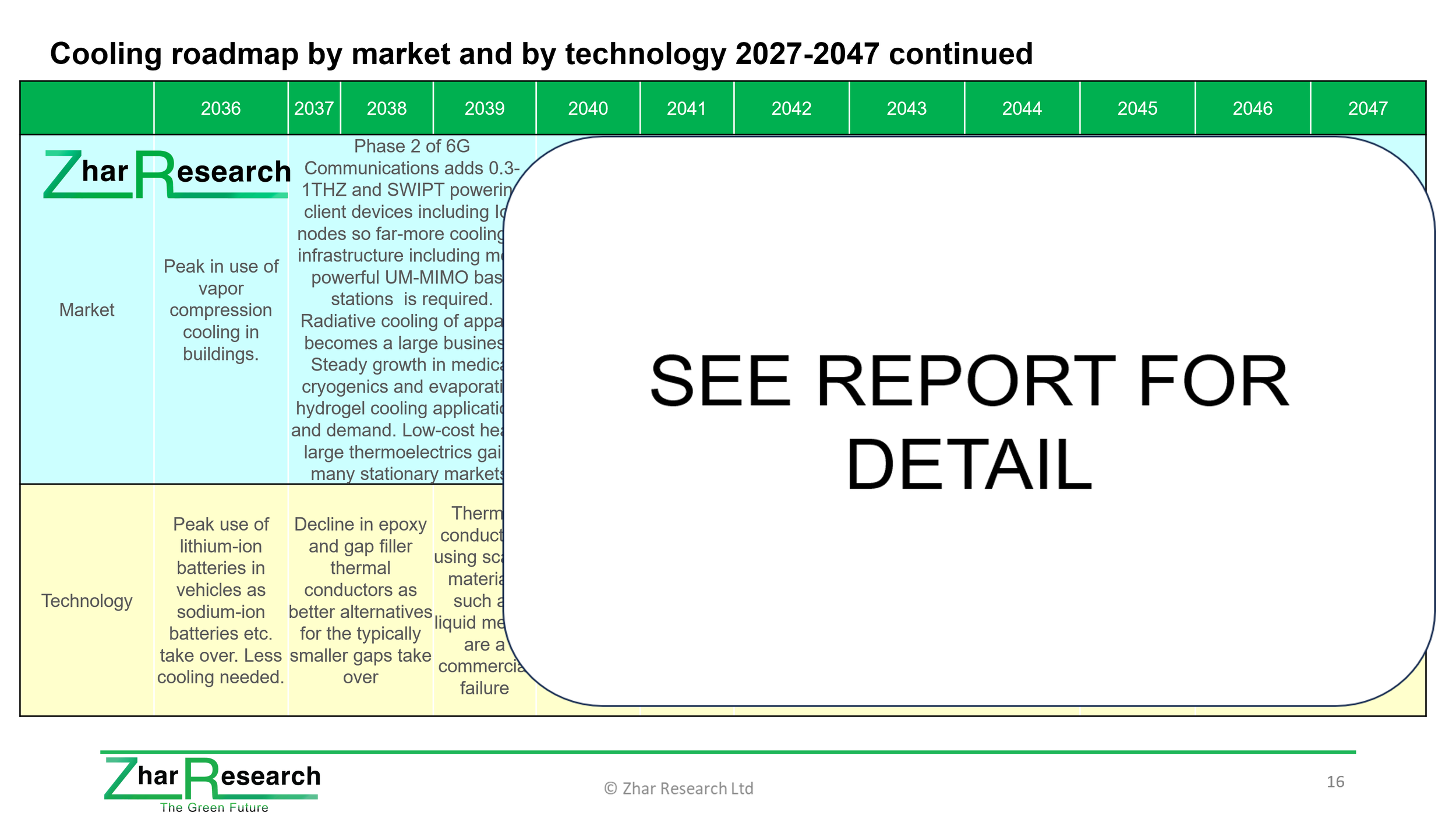
1.11 Solid state cooling roadmap by market and by technology 2027-2047
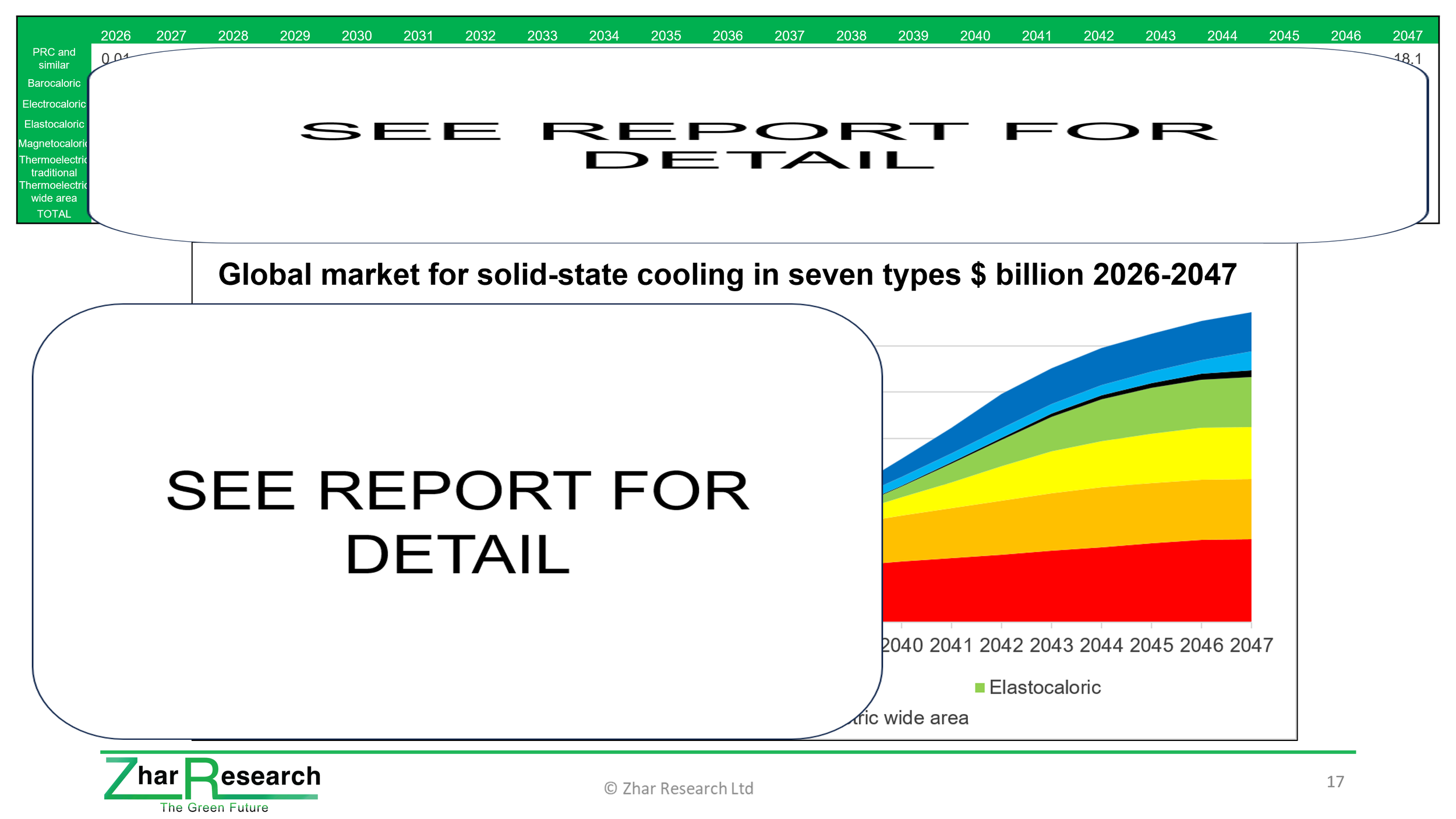
1.12 Market forecasts as tables, graphs, explanation in 31 lines 2027-2047 1.12.1 Cooling module global market by seven technologies $ billion 2026-2047
1.12.2 Terrestrial radiative cooling performance in commercial products W/sq. m 2025-2047
1.12.3 Air conditioner value market $ billion 2024-2047
1.12.4 Global market for HVAC, refrigerators, freezers, other cooling $ billion 2025-2047
1.12.5 Refrigerator and freezer value market $ billion 2024-2047
1.12.6 Stationary battery market $ billion and cooling needs 2024-2047
1.12.7 Thermal management material and structure for 6G Communications infrastructure and client devices $ billion if 6G is successful 2026-2047
1.12.8 Dielectric and thermal materials for 6G value market % by location 2029-2047
1.12.9 5G vs 6G thermal interface material market $ billion 2025-2047
1.12.10 Market for 6G vs 5G base stations units millions yearly 2025-2047
1.12.11 Market for 6G base stations market value $bn if successful 2029-2047
1.12.12 Smartphone billion units sold globally 2024-2047 if 6G is successful
1.12.13 Thermal meta-device market $ billion 2025-2047 by 3 application segments
-
2.1 General situation
2.2 Examples of radical changes in the requirements for cooling 2027-2047
2.2.1 Escalation of demand for air conditioning and forthcoming changes in requirement
2.2.2 Infogram: Cooling needs increase for many reasons 2027-2047
2.2.3 Dangers of water and localised cooling of your body
2.2.4 Growing problems call for new solutions when cooling buildings
2.2.5 The increasing problems of traditional vapor compression cooling
2.2.6 How 6G Communications from 2030 will bring new cooling requirements: infograms
2.2.7 AI datacenters, grid storage batteries, fusion mega-lasers, solar panels and other cooling problems
2.2.8 Severe new microchip cooling requirements arriving
2.3 Some of the primary answers to emerging cooling challenges 2027-2047
2.3.1 How cooling technology will trend to smart materials 2027-2047
2.3.2 Back to the future: bring back ancient passive cooling for buildings
2.3.3 Reinventing air conditioning to be lower power, greener, more affordable
2.3.4 Cooling future microchips, batteries and electronics with or without solid-state cooling
2.3.5 Answers to 6G Communications bringing tougher heat issues from 2030
2.3.6 Smart textiles: solid-state and other
2.4 Attention vs maturity of cooling technologies 3 curves 2027, 2037, 2047
2.5 Twelve solid-state cooling operating principles compared by 10 capabilities
2.6 Infogram: The future of thermal interface materials and other cooling by thermal conduction
2.7 Undesirable materials widely used and proposed: this is an opportunity for you
-
3.1 Overview with SWOT appraisal, 2027 maturity curve
3.2 PRC basics
3.2.1 Definition, origin, purpose, six aspects compared
3.2.2 Two-sided Janus option with SWOT and 2025, 2026 advances appraised
3.2.3 Anti-Stokes fluorescence cooling with advances 2024 through 2025 and SWOT appraisal
3.3 Materials analysis 2025, 2026 including paint and multi-mode, multifunctional PRC advances
3.3.1 Overall materials analysis with commercial implications
3.3.2 PRC paint and color without compromise
3.3.3 Aerogel and porous material approaches
3.3.4 Environmental and inexpensive PRC materials development
3.3.5 Advanced thermal insulation for PRC: polymer, ceramic, 3DP
3.4 Emerging PRC applications: datacenters, buildings, water harvesting, solar panels, apparel, flexible electronics, other
3.4.1 Overall opportunity and progress including proposals for datacenters
3.4.2 PRC for buildings, solar panels and windows: progress in 2025-6
3.4.3 Textile, fabric, wearable PRC: commercial implications of 2025-6 advances and SWOT
3.4.4 PRC cold side boosting power of thermoelectric generators
3.4.5 Cooling of photovoltaics: solid-state options in context
3.4.6 Radiative Cooling Technologies in Agri-food Systems
3.5 Bioinspired, adaptive and tunable PRC advances 2025-6 3.6 Wider picture
3.6.1 Overview: including roads and high-power laser cooling
3.6.2 Other 2025-6 research related to PRC
-
4.1 Overview
4.2 3M USA
4.3 BASF Germany
4.4 Dewpoint Innovations Australia
4.5 i2Cool USA
4.6 Kizawa Kougyo Japan
4.7.LifeLabs USA
4.8 Plasmonics USA
4.9 Radicool Japan, Malaysia etc.
4.10 SkyCool Systems USA
4.11 SolCold Israel
4.12 Spinoff from University of Massachusetts Amherst USA
4.13 SRI USA
-
5.1 Overview and structural and ferroic phase change cooling modes and materials
5.1 Overview: Phase change cooling modes including change of ferroic state with infograms
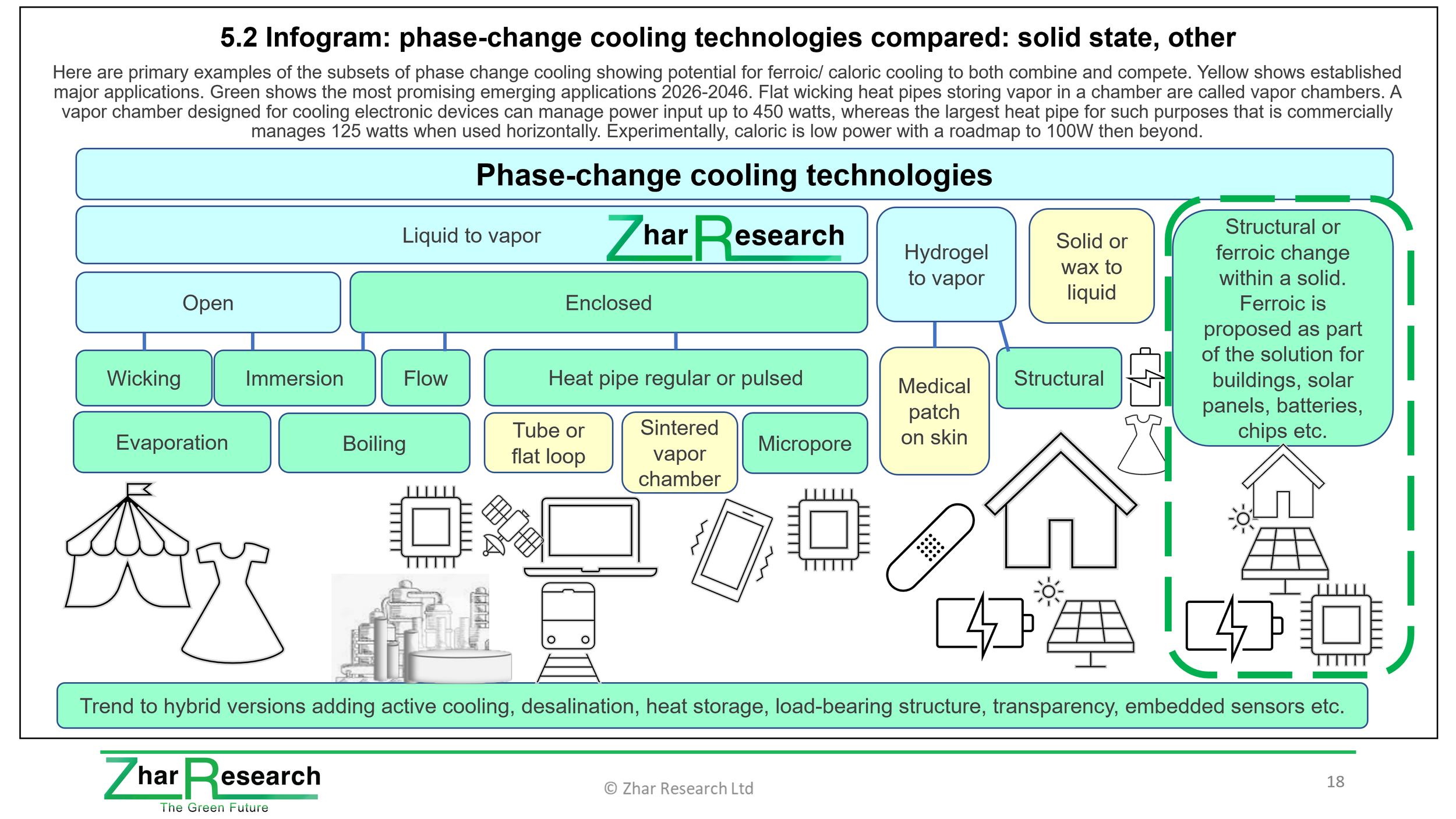
5.2 Infogram: phase-change cooling technologies compared: solid state, other
5.3 Oriented composite phase change material (OCPCM)
5.4 Caloric cooling: technical context and operating principles
5.5 Caloric compared to thermoelectric cooling and winning caloric technologies identified
5.6 Some proposals for work to advance the use of caloric cooling
5.7 Electrocaloric cooling with SWOT appraisal
5.7.1 Overview and SWOT appraisal
5.7.2 Operating principles, device construction, successful materials and form factors
5.7.3 Electrocaloric material popularity in latest research with explanation
5.7.4 Electrocaloric cooling: issues to address
5.7.5 Electrocaloric cooling research advances 2025 and 2026
5.8 Magnetocaloric cooling with SWOT appraisal
5.8.1 Overview with progress 2025 and 2026
5.8.2 Magnetocaloric cooling in detail
5.9 Mechanocaloric cooling (elastocaloric, barocaloric, twistocaloric) cooling with SWOT appraisals
5.9.1 Elastocaloric cooling overview: operating principle, system design, applications, SWOT
5.9.2 Elastocaloric advances 2025 and 2026
5.9.3 Barocaloric cooling: breakthroughs in 2025 and 2026 with SWOT
5.10 Multicaloric cooling advances in 2025 and 2026
5.11 Emerging manufacturers of caloric cooling systems
-
6.1 Overview
6.1.1 Emerging capabilities with images, infograms, achievements, two SWOT appraisals
6.1.2 Applications of metamaterial cooling
6.1.3 Active (powered) metamaterials and power from metamaterial harvesting
6.2 Major advances in metamaterial solid-state cooling 2025 and 2026 with commercial implications
6.2.1 General situation
6.2.2 Thermal management with phase change metamaterials
6.2.3 Metamaterial smart windows and greenhouses for thermal control
6.2.4 Metamaterials cooling buildings and devices
6.2.5 Metamaterial cooling overlayers for solar panels
6.2.6 Metamaterial textiles that cool with SWOT
-
7.1 Basics, including SWOT appraisal and 2026 Sony thermoelectric neck and back coolers
7.1.1 Operation, examples including new interest in hybrid system, 2026 advances
7.1.2 Thermoelectric cooling and temperature control: refrigerators, seats, batteries, microchips, other
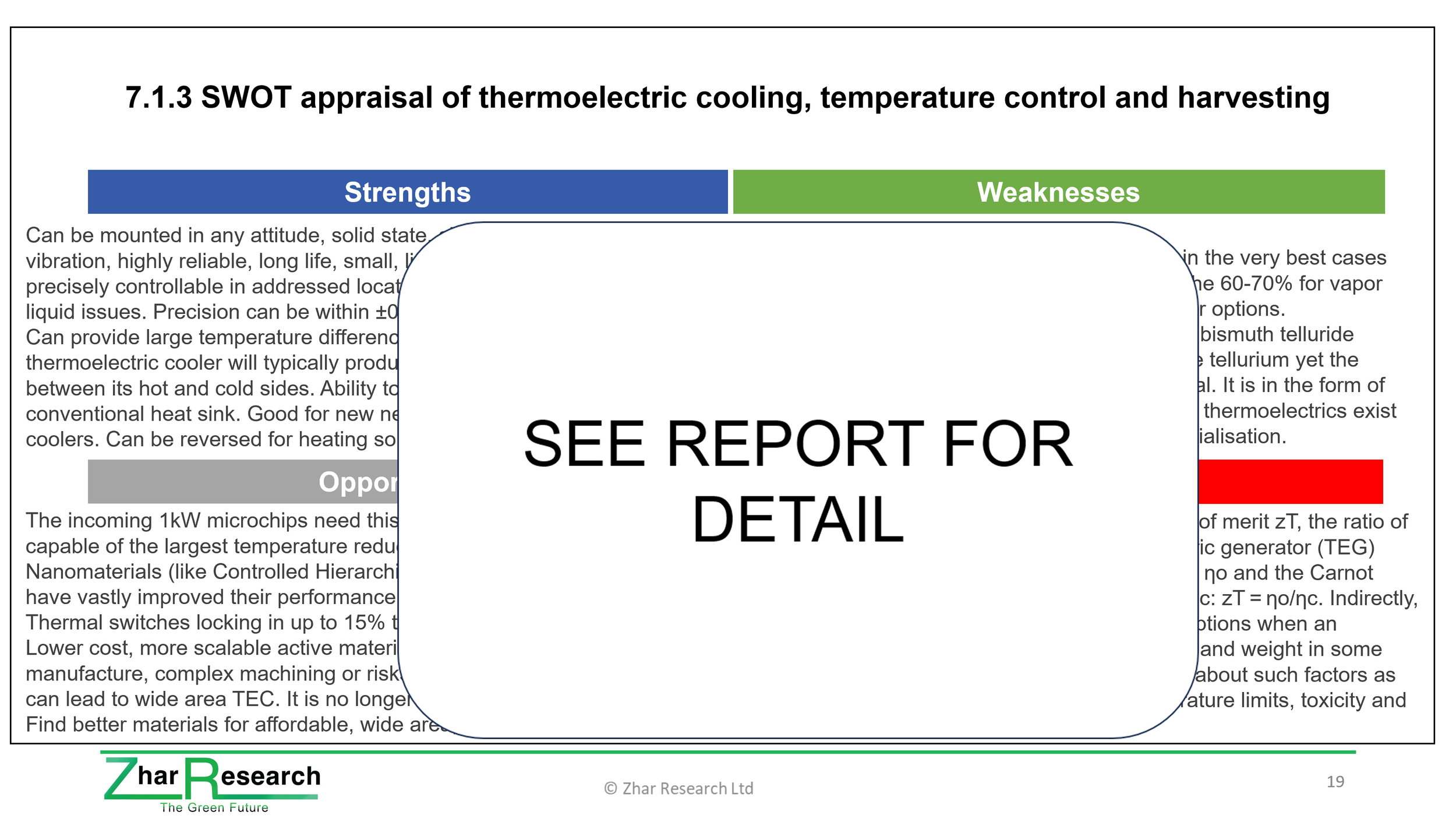
7.1.3 SWOT appraisal of thermoelectric cooling, temperature control and harvesting
7.2 Thermoelectric materials
7.2.1 Requirements
7.2.2 Useful and misleading metrics
7.2.3 Quest for better zT performance which is often the wrong approach
7.2.4 Some alternatives to bismuth telluride being considered
7.2.5 Non-toxic and less toxic thermoelectric materials, some lower cost
7.2.6 Ferron and spin driven thermoelectrics
7.3 Wide area and flexible thermoelectric cooling is a gap in the market for you to address
7.3.1 The need and general approaches
7.3.2 Advances in flexible and wide area thermoelectric cooling in 2026 and earlier
7.3.3 Wide area or flexible TEG research 40 examples that may lead to similar TEC
7.4 Radiation cooling of buildings: multifunctional with thermoelectric harvesting
7.5 The heat removal problem of TEC and TEG – evolving solutions
7.5.1 General
7.5.2 Integrating thermoelectric and PRC
7.6 83 Manufactures of Peltier cooling thermoelectric modules and products
-
8.1 Overview: thermal adhesives to thermally conductive concrete
8.1.1 TIM, heat spreaders from micro to heavy industrial: activity of 17 companies
8.1.2 18 examples of research advances in 2026 and earlier
8.1.3 Annealed pyrolytic graphite: progress in 2025 and 2024 as microelectronic TIM
8.1.4 Thermally conductive concrete and allied work
8.2 Important considerations when solving thermal challenges with conductive materials
8.2.1 Bonding or non-bonding
8.2.2 Varying heat
8.2.3 Electrically conductive or not
8.2.4 Placement
8.2.5 Environmental attack
8.2.6 Choosing a thermal structure
8.2.7 Research on embedded cooling
8.2.8 Smart ceramics permit control of heat flow in 2026
8.3 Thermal Interface Material TIM
8.3.1 General
8.3.2 Seven current options compared against nine parameters
8.3.3 Ten important research advances in 2024-6
8.3.4 Thermal pastes compared
8.3.5 TIM and other examples today: Henkel, Momentive, ShinEtsu, Sekisui, Fujitsu, Suzhou Dasen
8.3.6 37 examples of TIM manufacturers
8.3.7 Thermal interface material trends as needs change: graphene, liquid metals etc.
8.4 Polymer choices: silicones or carbon-based
8.4.1 Comparison
8.4.2 Silicone parameters, ShinEtsu, patents
8.4.3 SWOT appraisal for silicone thermal conduction materials
8.5 Thermally conductive polymer advances
8.5.1 Overview
8.5.2 Examples of companies making thermally conductive additives
8.5.3 Thermally conductive polymers: pie charts of host materials and particulates prioritised in research
8.5.4 Important new progress
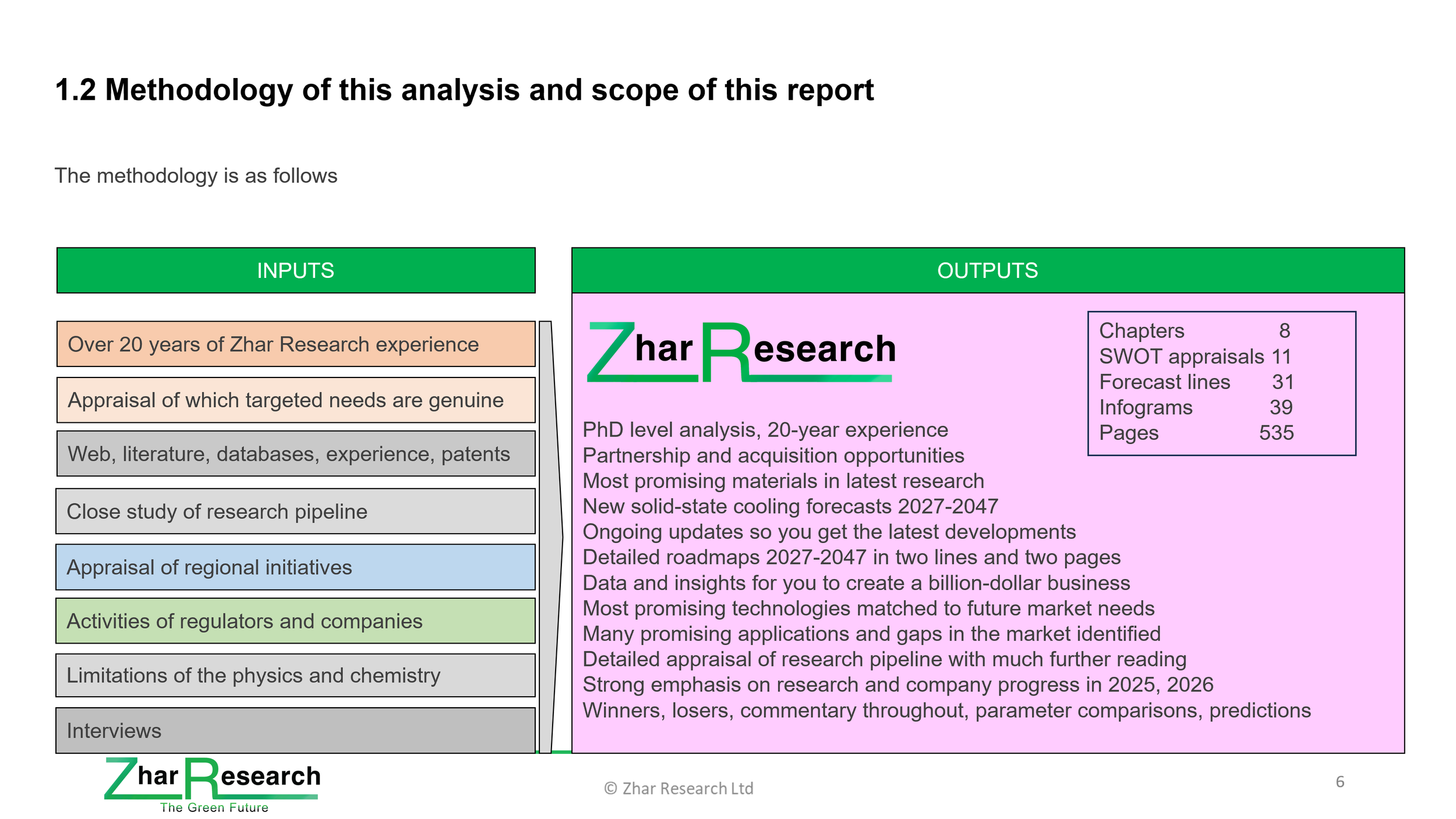
Join the surge in solid-state cooling by reading the latest, most thorough report on the subject. The commercially-oriented 535-page report is Zhar Research “Solid State Cooling Materials, Systems: Passive Radiative, PDRC, Caloric, Thermoelectric, Metamaterial, Conductor, Multimode, Multipurpose: Markets, Technology 2027-2047”. It assists all in the emerging value chain, particularly intending materials and device suppliers, product and system integrators and investors. Its eight chapters include 11 SWOT appraisals, roadmaps 31 forecast lines and 39 new infograms.
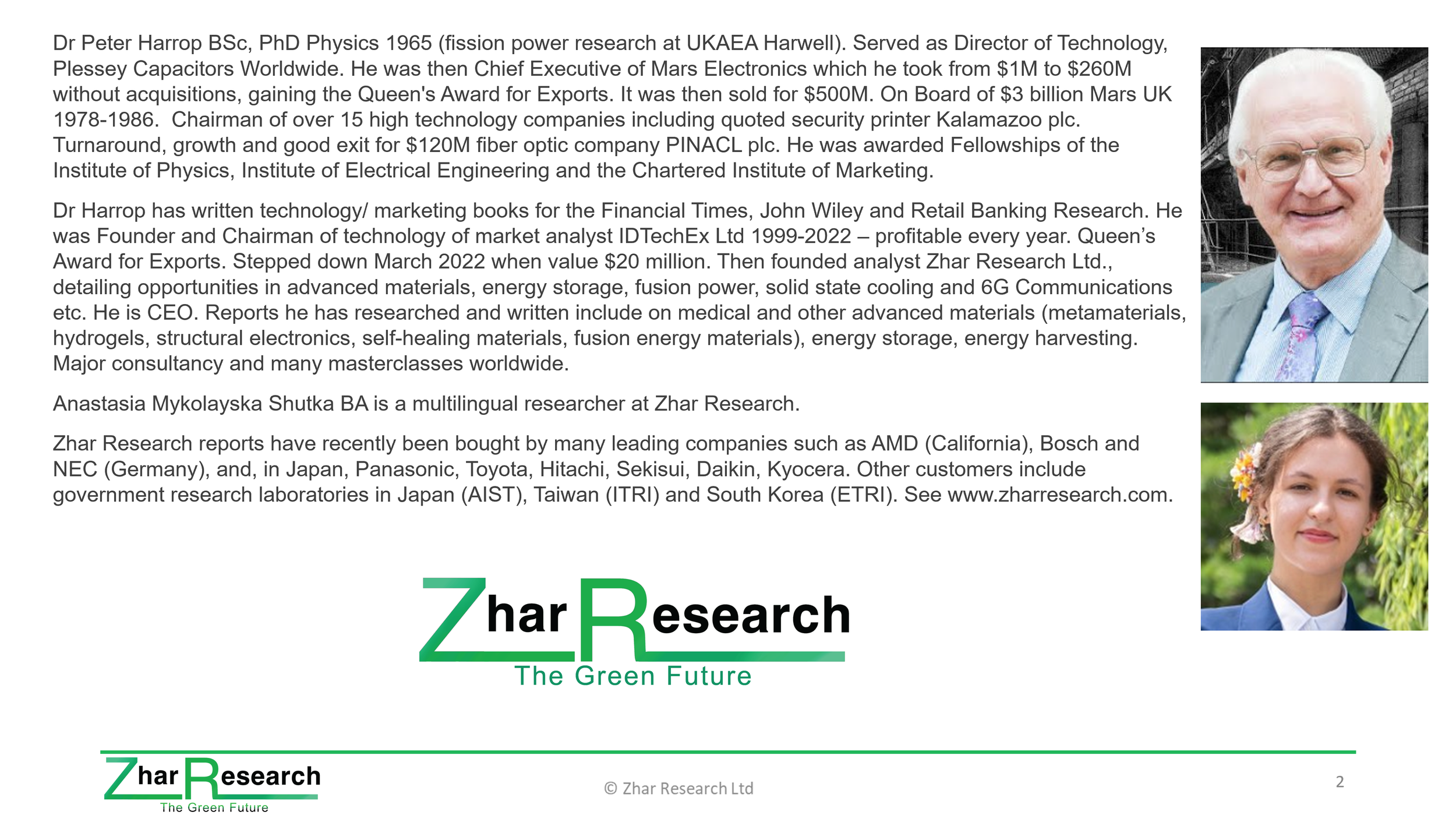
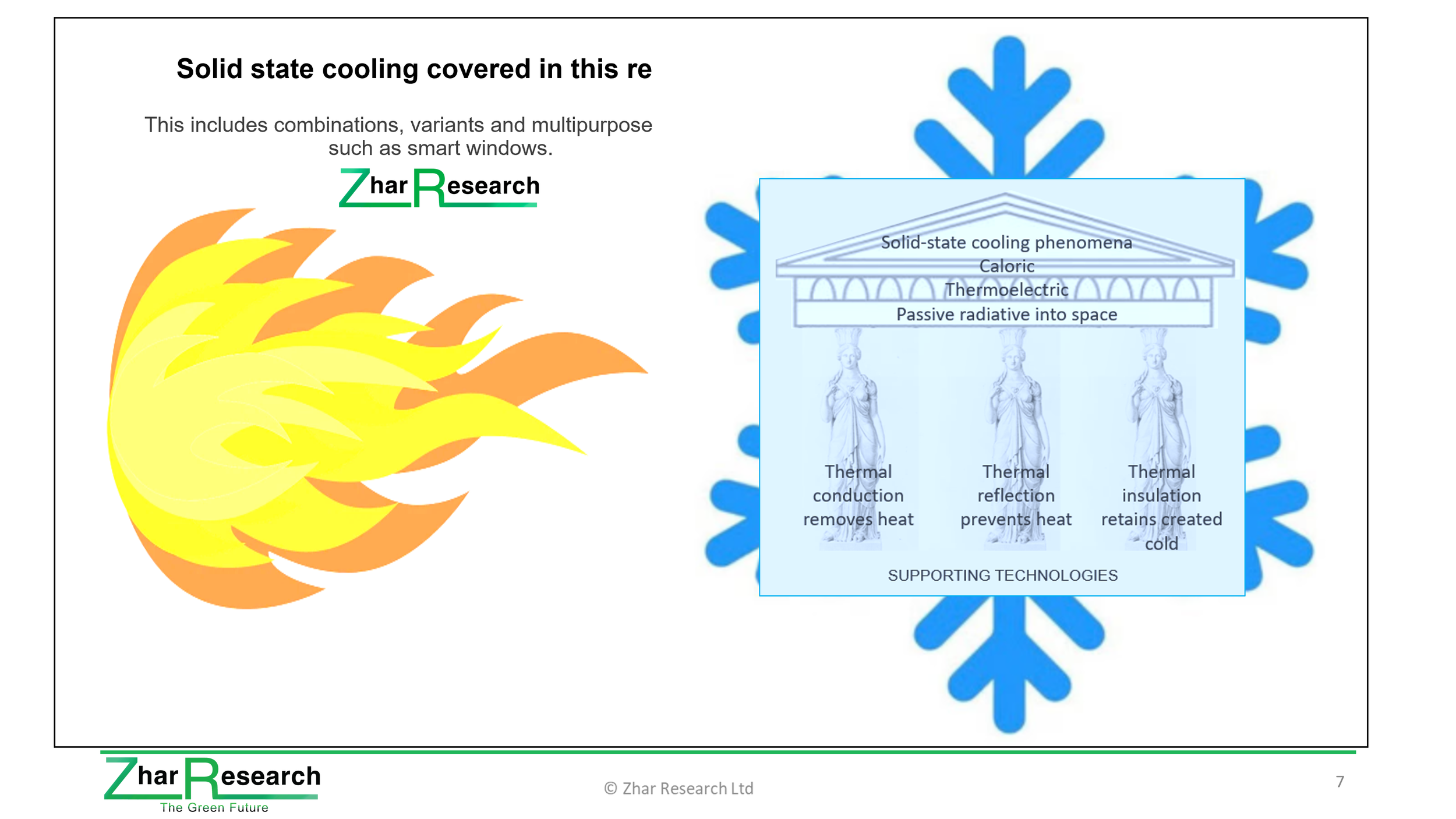
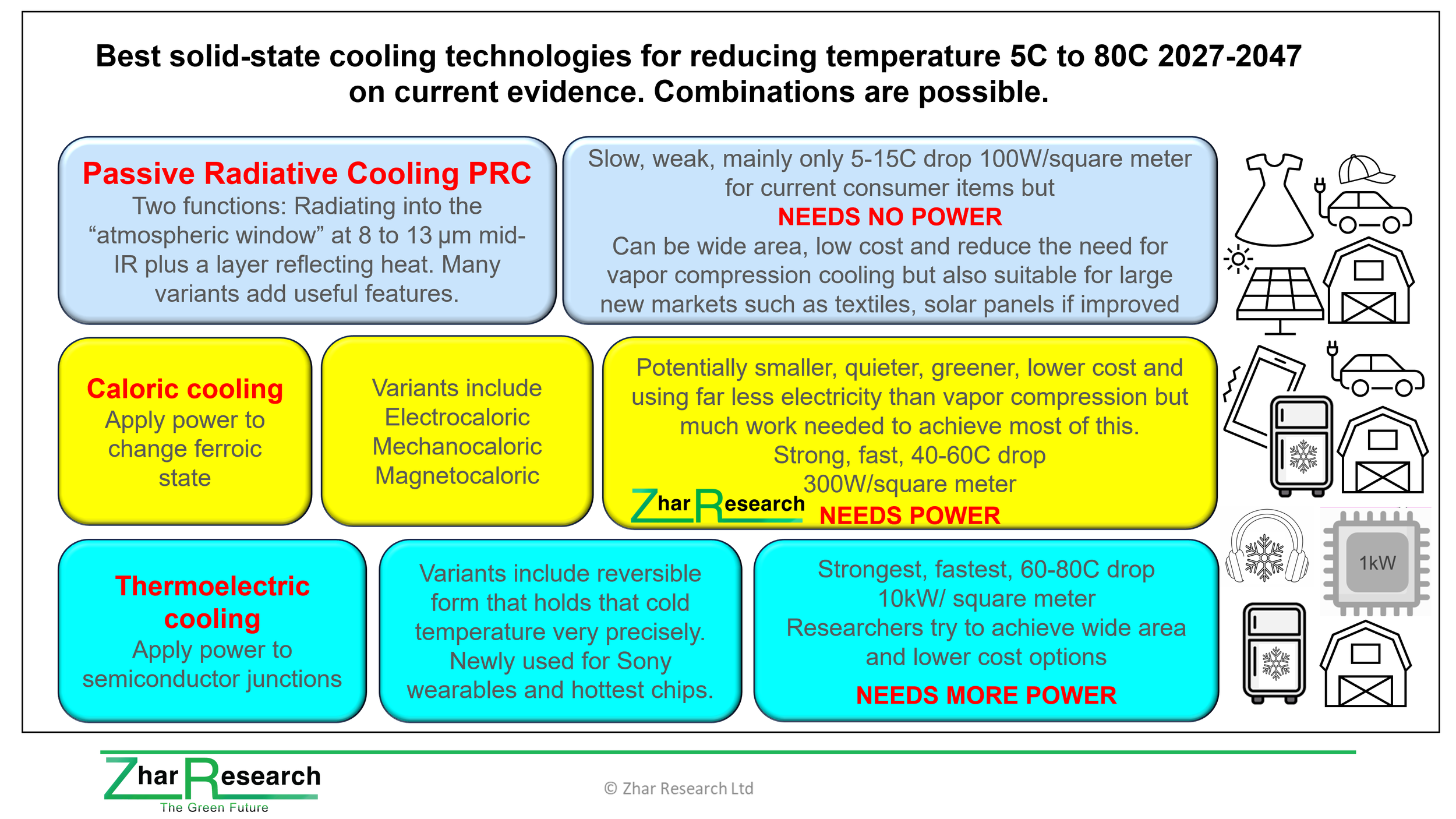
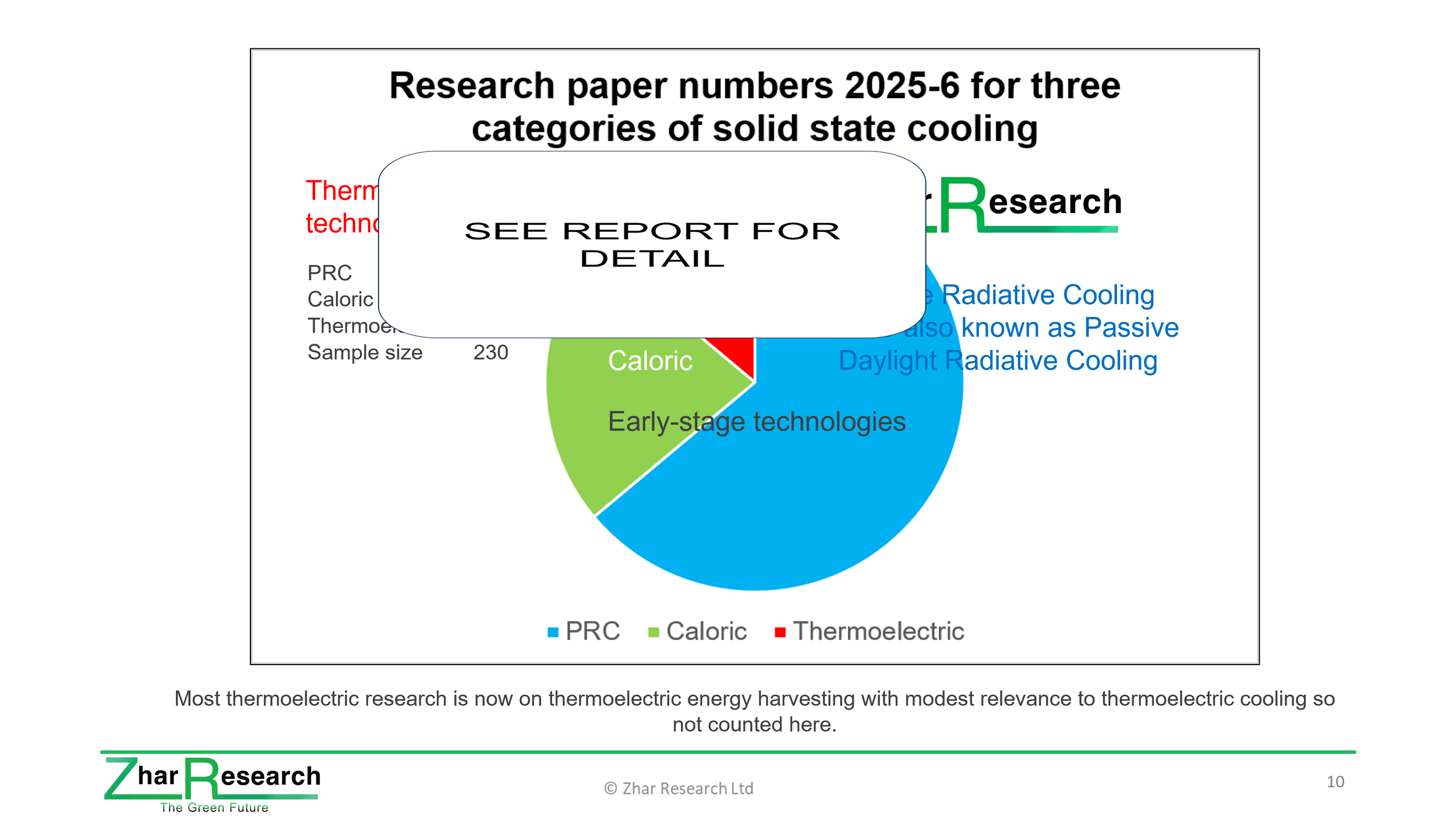
The primary author provides PhD level analysis, including implications of major research and company advances through 2026. He speaks from a background of creating several successful companies. His research finds a $67 billion market arriving over the next 20 years from only $1 billion today. Most will consist of three complementary technology families – passive radiative cooling also known as passive daylight radiative cooling, caloric cooling and thermoelectric cooling.
Recently, PRC and caloric cooling have been boosted by major technical advances and 3M products. Thermoelectric cooling is now boosted by meeting new needs such as Sony cooling wearables and others cooling the new 1kW microchips. Next come such things as coping with global warming, very hot AI datacenters, hotter 6G Communications, hot solar panels. Solid-state cooling will gradually displace vapor compression cooling in buildings, vehicles, refrigerators and freezers for a host of identified reasons. They include using less electricity, creating less or no heat by- product, cost, size and toxigen reduction.
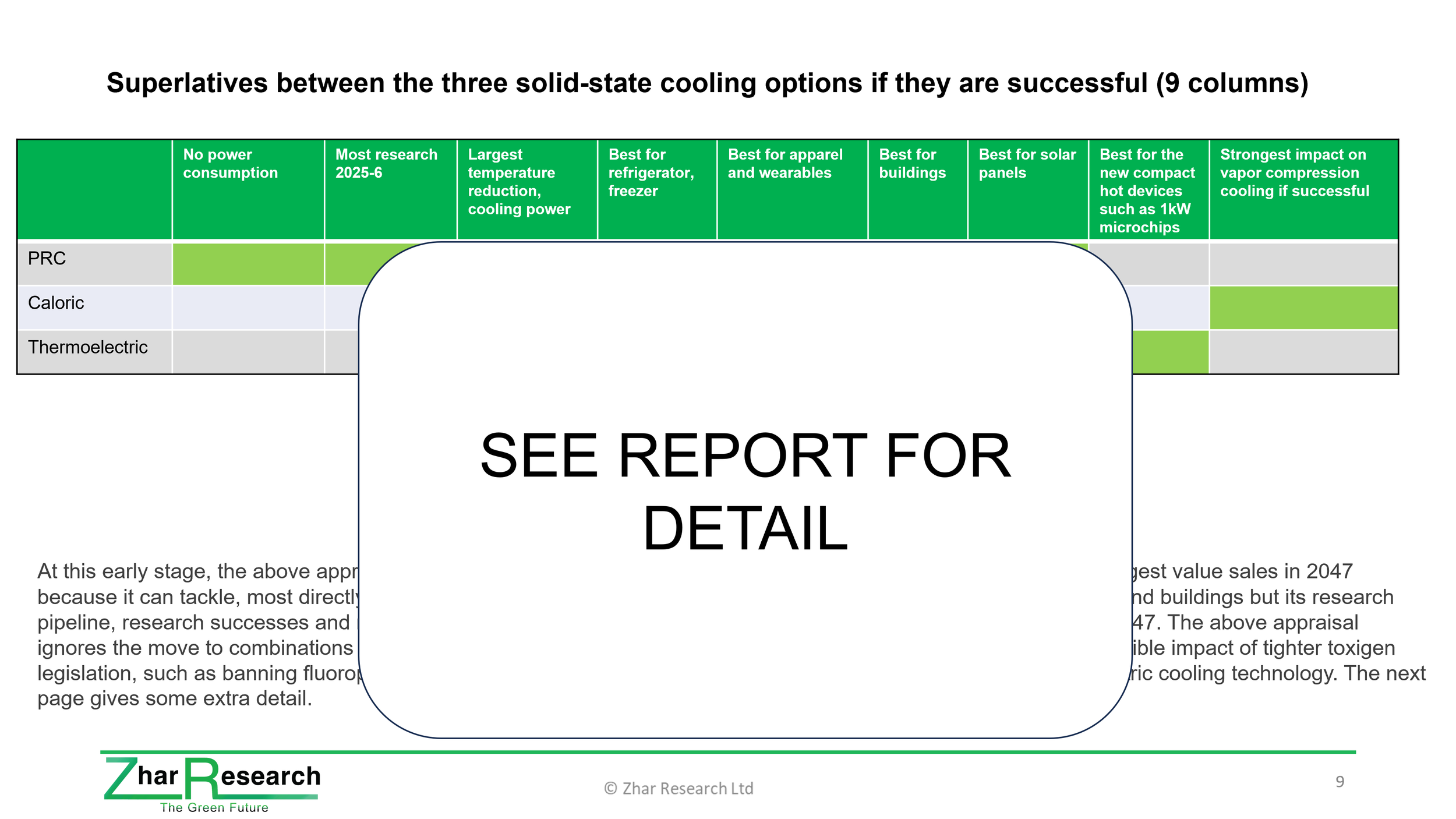
The Executive Summary and Conclusions (48 pages) is complete for those with limited time. See basics, winning materials, company analysis, 24 primary conclusions, most SWOT appraisals, then roadmaps and 31 lines of forecasts 2027-2047. The Introduction (35 pages) then explains the many needs arriving to demand solid-state cooling. See the big picture such as the trend to smart materials including textiles and your opportunity to replace undesirable materials. Many new infograms and tables pull this together including one giving twelve solid-state cooling operating principles compared by 10 capabilities.
Chapter 3. Passive Radiative Cooling (PRC)/ Passive Daylight Radiative Cooling (PDRC) and Allied Topics takes 105 pages because it enjoys the most advances in 2025 and 2026 – here examined in detail - and has very broad potential mainly beyond replacing or reducing vapor compression cooling. Here are many pie charts and SWOT appraisals and a full explanation of variants and combinations overcoming limitations such as directionality. Chapter 4. Twelve Companies Commercialising PRC (37 pages) supports this including profiles of the PRC activity of giant companies such as 3M now involved. Its 3M™ Passive Radiative Cooling Film (PRCF) is a high-tech material that cools surfaces without electricity. It works 24/7 by reflecting 94% of sunlight and sending trapped heat into the cold upper atmosphere. This lowers surface temperatures and saves 10-20% on HVAC energy costs. Datacenter roofing is one beneficiary.
Chapter 5. Solid-State Phase Change Cooling: Caloric and OCPCM (111 pages) introduces phase change cooling and the solid-state part which is most promising with caloric cooling (change of ferroic state) but a new supporting technology called Oriented Composite Phase Change Material (OCPCM) is briefly covered – a directional thermal conductor. See the present and future of magnetocaloric, electrocaloric and mechanocaloric options (of which elastocaloric and barocaloric are most important). Magnetocaloric has long been commercialised with modest success but the research and company emphasis has pivoted to the others recently. Why, what next, what are your opportunities as it takes off? Why is $40 billion in sales likely by 2047 as caloric takes a major bite out of vapor compression cooling business? The small number of manufacturers discussed will now rise sharply.
Chapter 6. Enabling Technology: Metamaterial Cooling Materials and Devices (60 pages) shows how these mainly support PRC with something beyond simple thermal conduction or insulation. Understand the benefits such as transparency, efficiency and compactness and what comes next. This virtuosity extends to smart windows and greenhouses, cooling buildings and devices including solar panels and even metamaterial textiles. Eight important 2026 research papers examined are just a part of this.
Chapter 7. Thermoelectric Cooling and Thermoelectric Harvesting as a User of and Power Provider for Other Solid-State Cooling (58 pages) explains why it would be wrong to dismiss thermoelectrics as mature and of no importance. Why has Sony just entered the field with volume products? 2025-6 research breakthroughs? 82 manufacturers named? It is all here. Part of the story is major new needs best served by thermoelectric cooling such as some personal and 1kW chip cooling. Add possible future breakthroughs in research such as affordable wide-area and nano versions.
The report closes with Chapter 8. Thermal Interface Materials TIM and Other Thermal Conducting Materials and Structures (53 pages). These do not create cold but they support solid-state cooling by carrying heat away. The Zhar Research report is your best guide to participating early in this exciting opportunity becoming tens of billions of dollars yearly.