

 Image 1 of 2
 Image 2 of 2
Sample Pages

Contents List
-
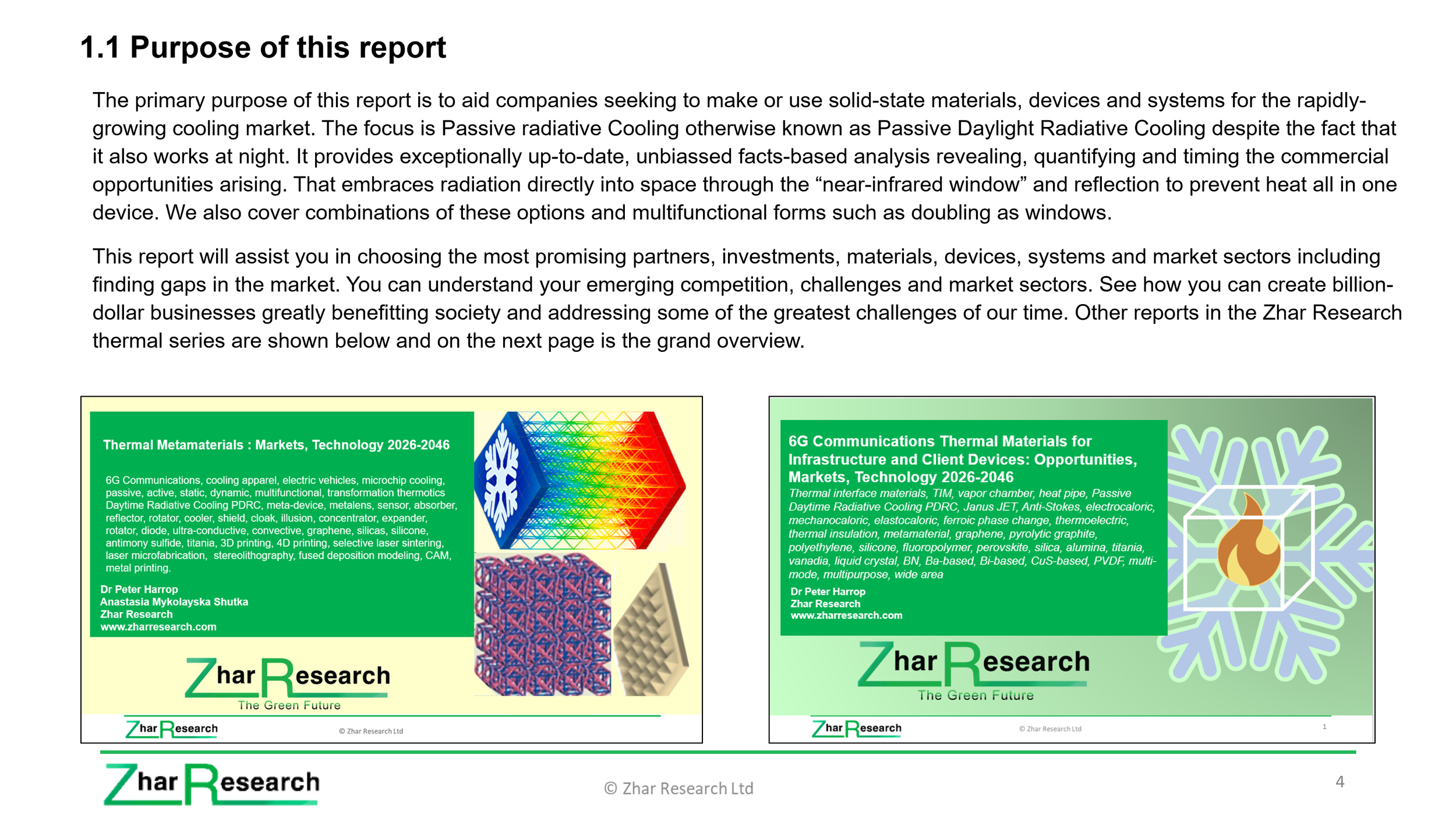
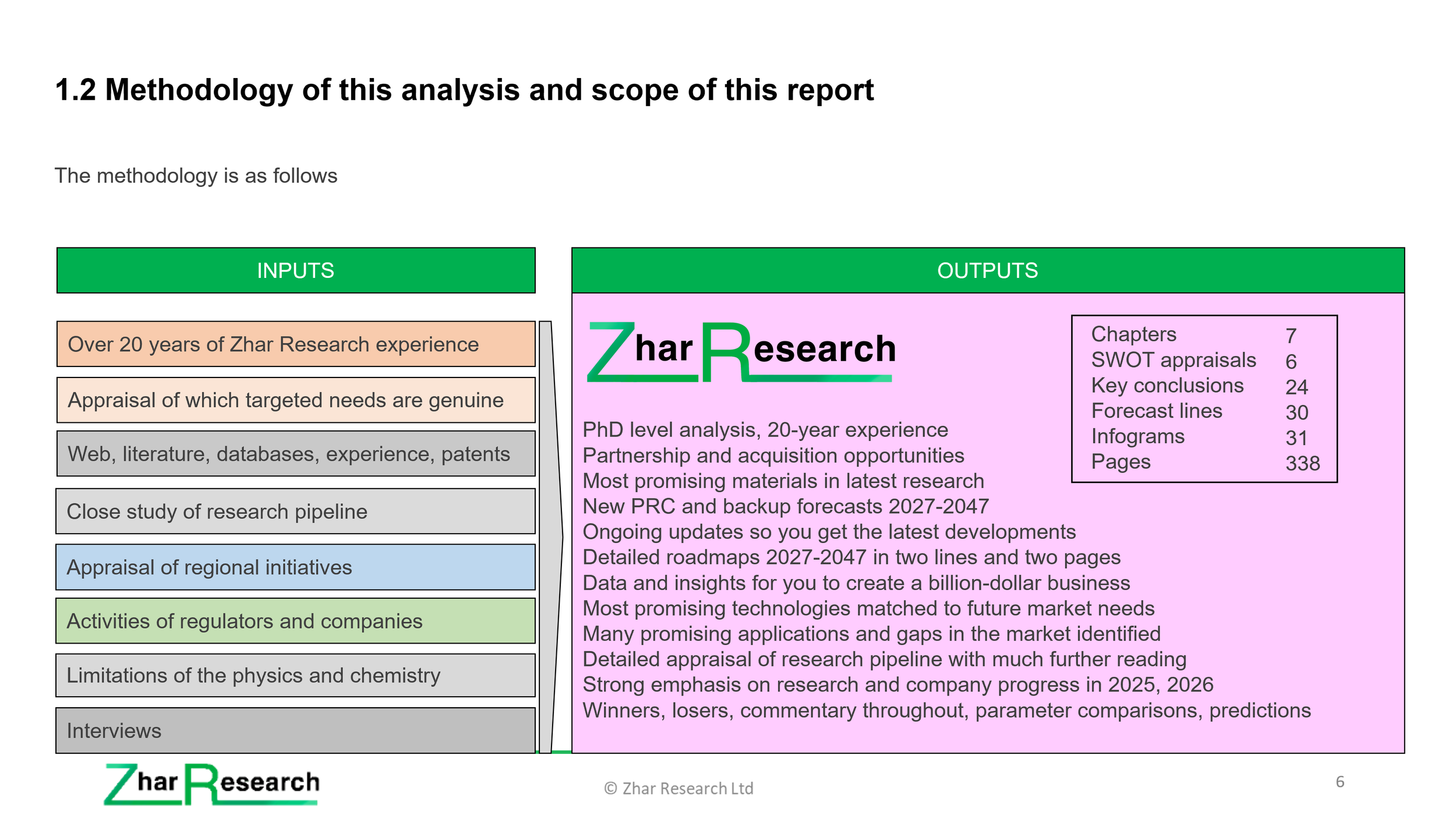
1.1 Purpose of this report
1.2 Methodology of this analysis and scope of the report
1.3 Reasons for the escalating need for cooling
1.4 Why solid-state cooling is now a priority, analysis of research, COP, forecast cooling by type, context
1.5 24 primary conclusions
1.6 Potential for replacing vapor compression cooling, and for use in solar panel and 6G Communications cooling
1.7 Winning materials and principles for solid-state cooling generally
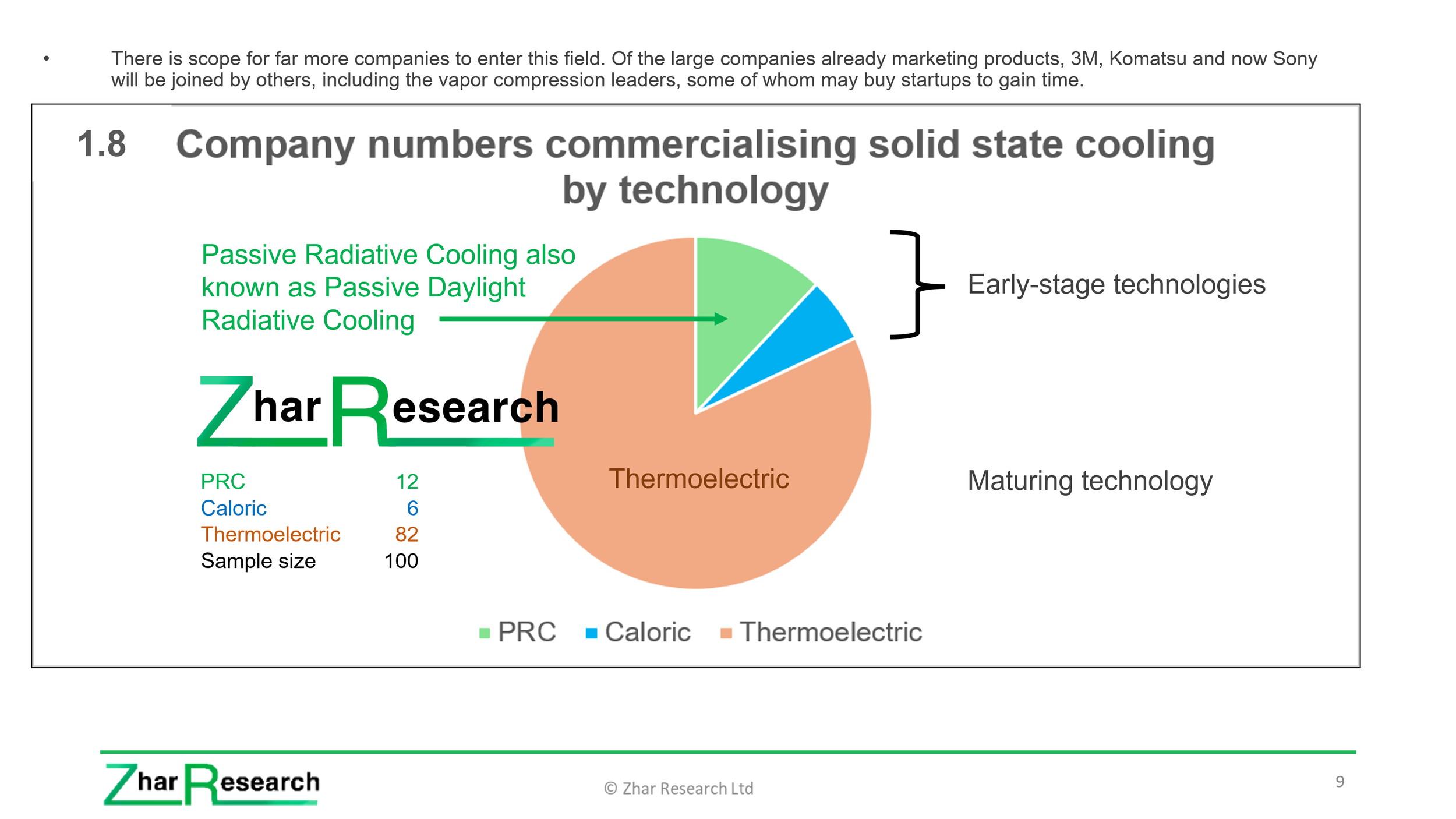
1.8 Company numbers commercialising solid state cooling by technology
1.9 SWOT appraisals and supporting materials analyses
1.9.1 Solid state cooling SWOT appraisal
1.9.2 Leading materials in 292 latest research advances in solid state cooling
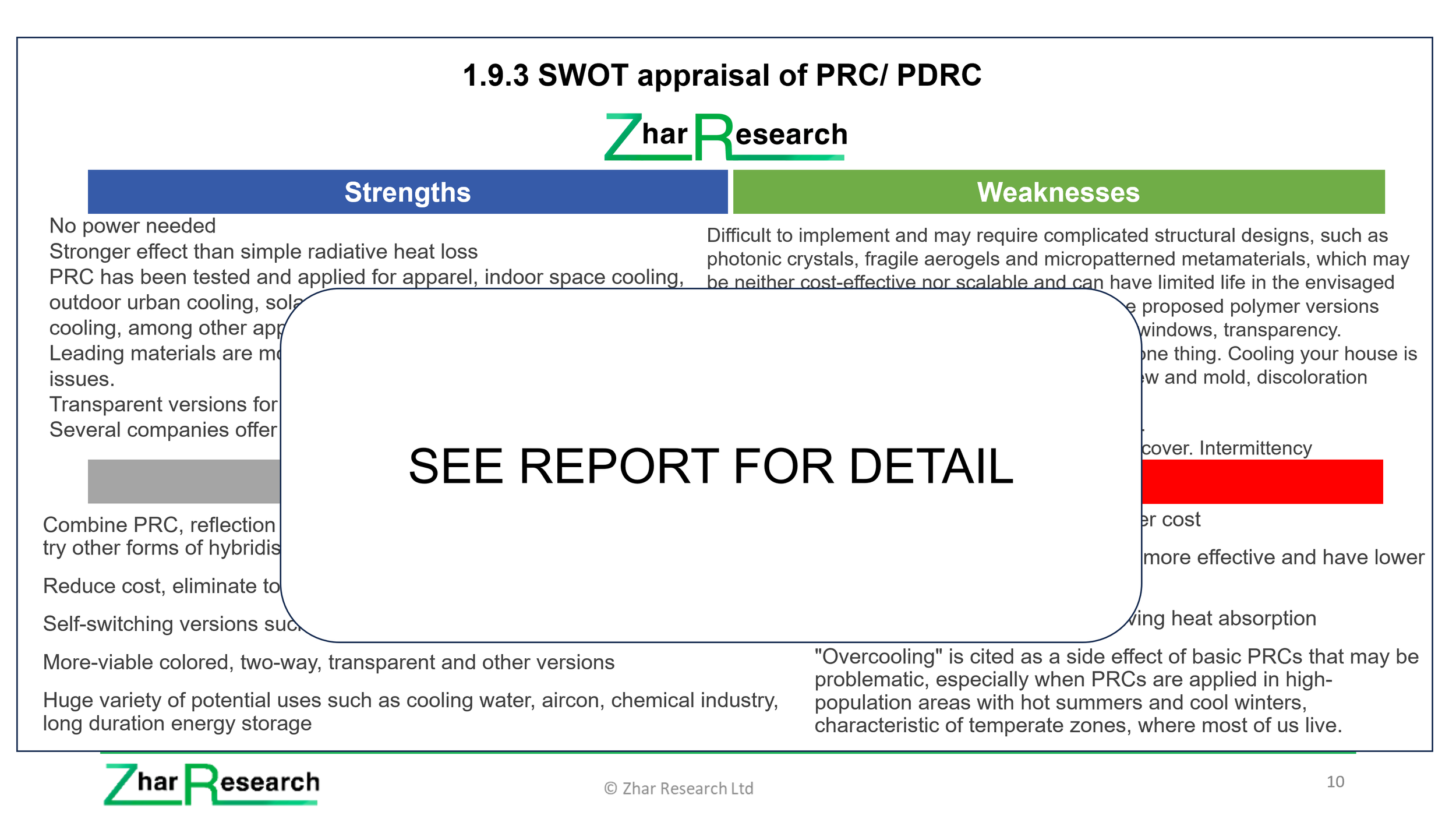
1.9.3 SWOT appraisal of PRC/ PDRC
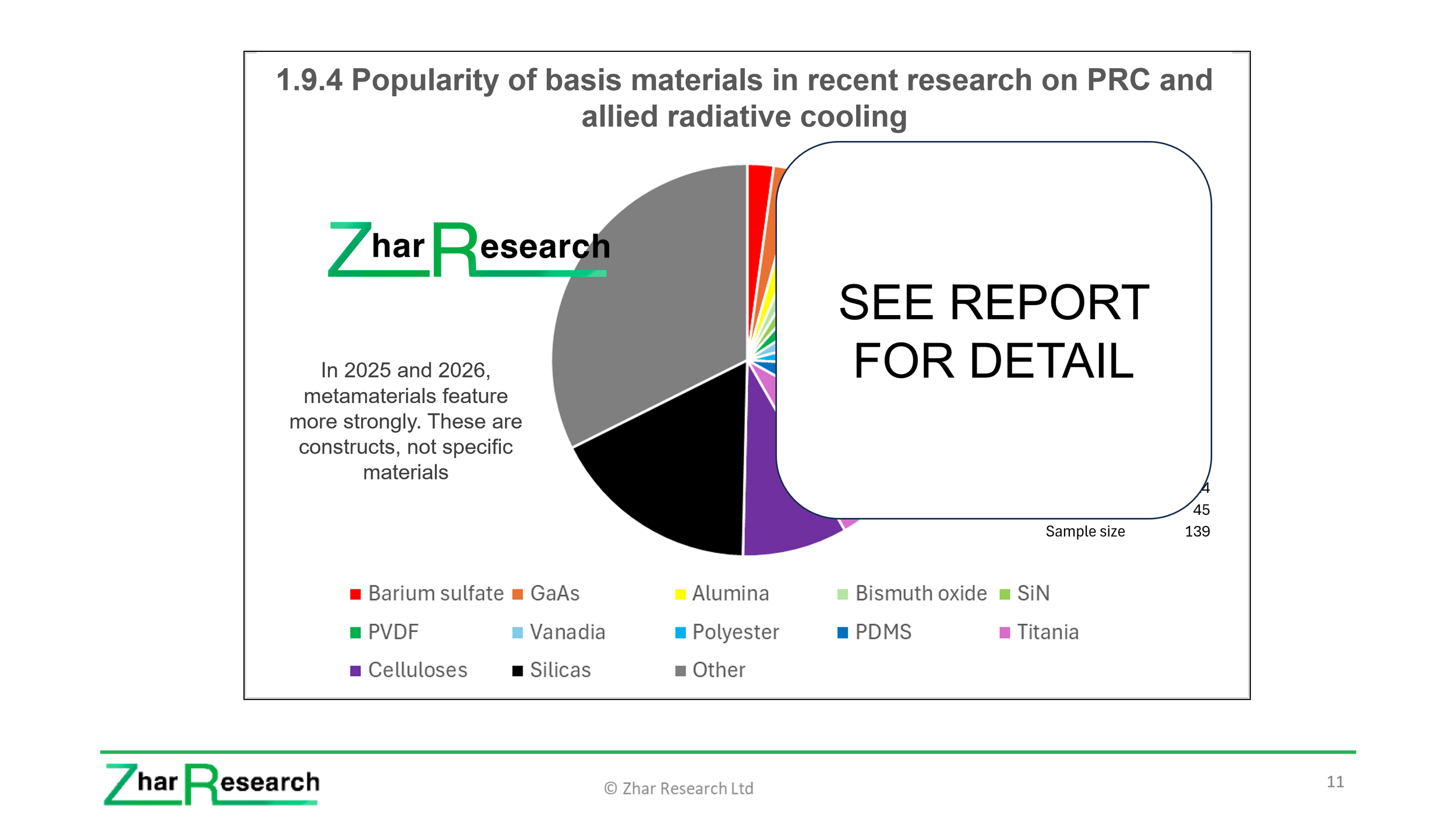
1.9.4 Popularity of basis materials in latest PRC research
1.9.5 SWOT appraisal of Janus effect for thermal management
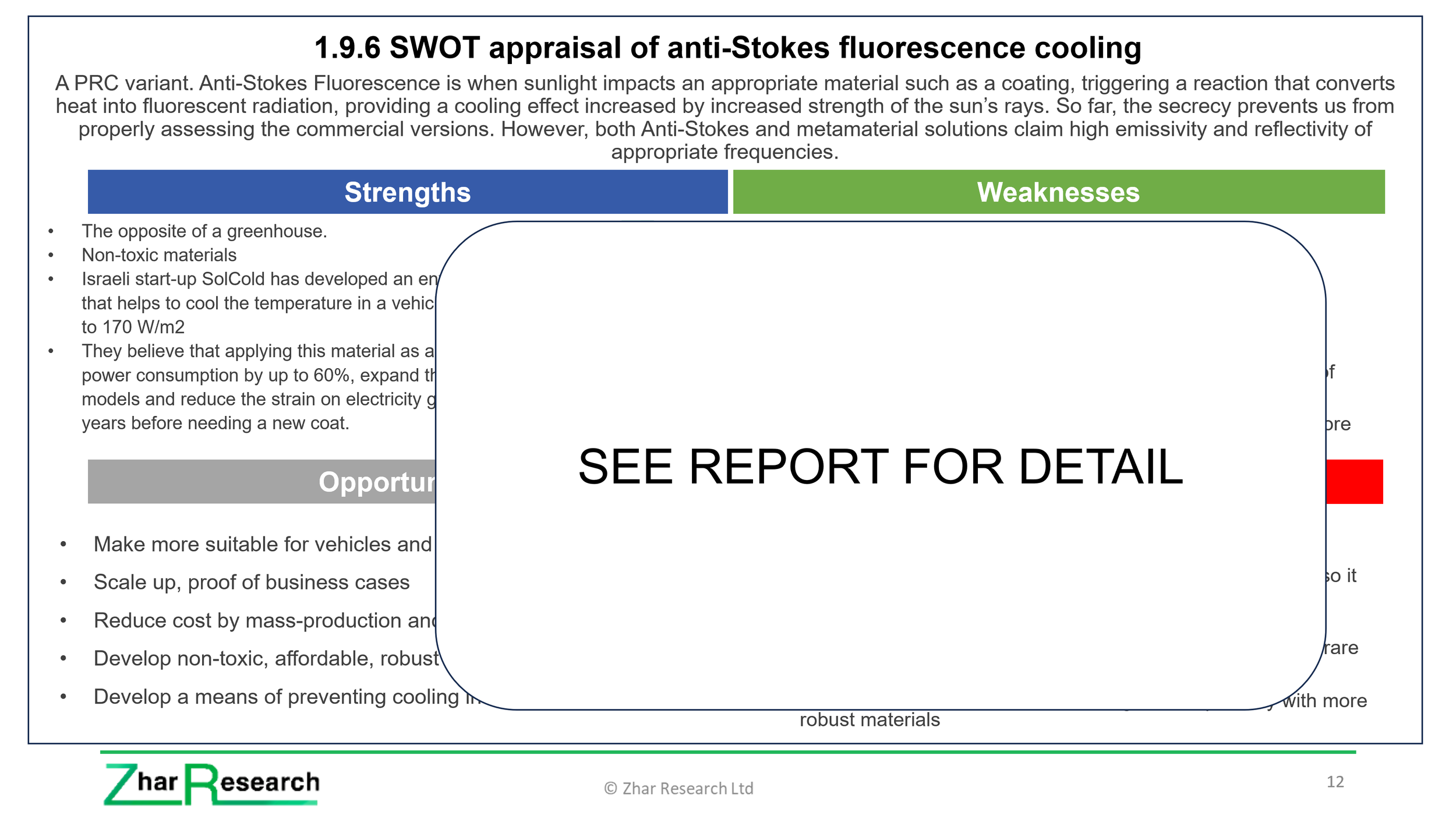
1.9.6 SWOT appraisal of anti-Stokes fluorescence cooling
1.9.7 SWOT appraisal of thermal metamaterials which mainly support PRC
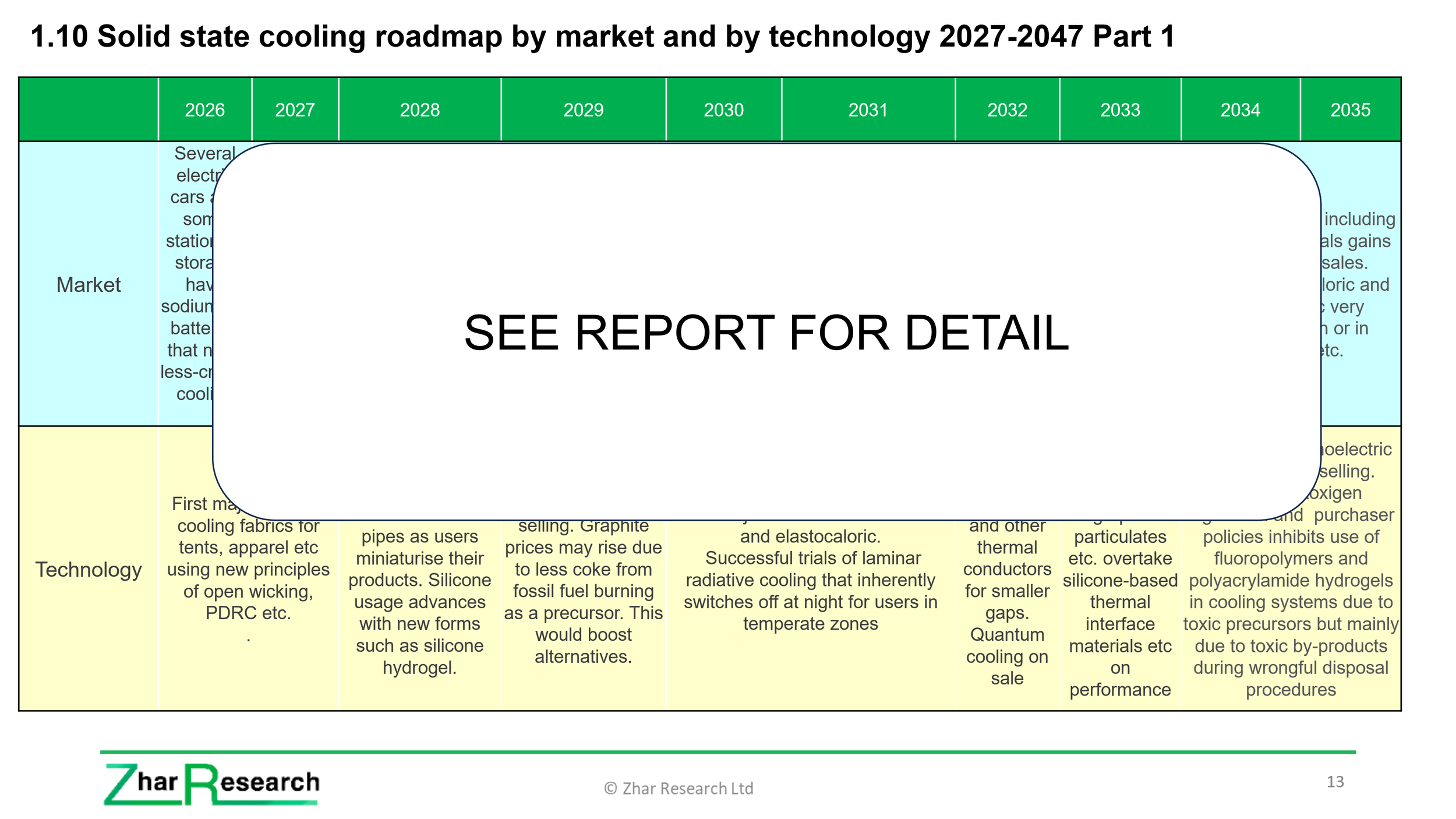
1.10 Solid state cooling roadmap by market and by technology 2027-2047
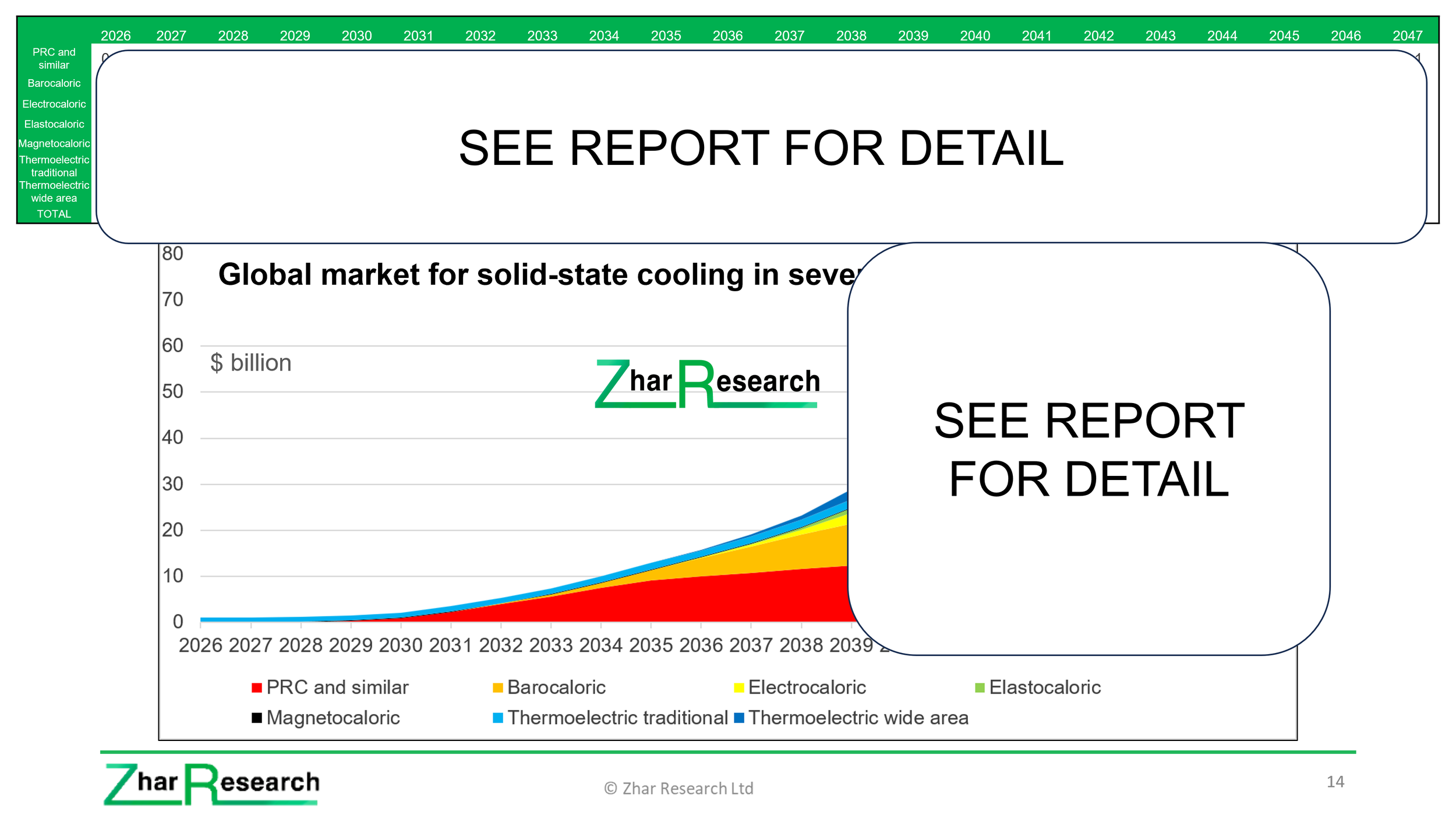
1.11 Market forecasts as tables, graphs, explanation in 30 lines 2027-2047 1.11.1 Cooling module global market by seven technologies $ billion 2026-2047
1.11.2 Terrestrial radiative cooling performance in commercial products W/sq. m 2025-2047
1.11.3 Air conditioner value market $ billion 2024-2047
1.11.4 Global market for HVAC, refrigerators, freezers, other cooling $ billion 2025-2047
1.11.5 Refrigerator and freezer value market $ billion 2024-2047
1.11.6 Stationary battery market $ billion and cooling needs 2024-2047
1.11.7 Thermal management material and structure for 6G Communications infrastructure and client devices $ billion if 6G is successful 2026-2047
1.11.8 Dielectric and thermal materials for 6G value market % by location 2029-2047
1.11.9 5G vs 6G thermal interface material market $ billion 2025-2047
1.11.10 Market for 6G vs 5G base stations units millions yearly 2025-2047
1.11.11 Market for 6G base stations market value $bn if successful 2029-2047
1.11.12 Smartphone billion units sold globally 2024-2047 if 6G is successful
1.11.13 Thermal meta-device market $ billion 2025-2047 by 3 application segments
-
2.1 General situation
2.2 Examples of radical changes in the requirements for cooling 2027-2047
2.2.1 Escalation of demand for air conditioning and forthcoming changes in requirement
2.2.2 Infogram: Cooling needs increase for many reasons 2027-2047
2.2.3 Dangers of water and localised cooling of your body
2.2.4 Growing problems call for new solutions when cooling buildings
2.2.5 The increasing problems of traditional vapor compression cooling
2.2.6 How 6G Communications from 2030 will bring new cooling requirements: infograms
2.2.7 AI datacenters, grid storage batteries, fusion mega-lasers, solar panels and other cooling problems
2.2.8 Severe new microchip cooling requirements arriving
2.3 Some of the primary answers to emerging cooling challenges 2027-2047
2.3.1 How cooling technology will trend to smart materials 2027-2047
2.3.2 Back to the future: bring back ancient passive cooling for buildings
2.3.3 Reinventing air conditioning to be lower power, greener, more affordable
2.3.4 Cooling future microchips, batteries and electronics with or without solid-state cooling
2.3.5 Answers to 6G Communications bringing tougher heat issues from 2030
2.3.6 Smart textiles: solid-state and other
2.4 Attention vs maturity of cooling technologies 3 curves 2027, 2037, 2047
2.5 Twelve solid-state cooling operating principles compared by 10 capabilities
2.6 Infogram: The future of thermal interface materials and other cooling by thermal conduction
2.7 Undesirable materials widely used and proposed: this is an opportunity for you
-
3.1 Overview with SWOT appraisal, 2027 maturity curve
3.2 PRC basics
3.2.1 Definition, origin, purpose, six aspects compared
3.2.2 Two-sided Janus option with SWOT and 2025, 2026 advances appraised
3.2.3 Anti-Stokes fluorescence cooling with advances 2024 through 2025 and SWOT appraisal
3.3 Materials analysis 2025, 2026 including paint and multi-mode, multifunctional PRC advances
3.3.1 Overall materials analysis with commercial implications
3.3.2 PRC paint and color without compromise
3.3.3 Aerogel and porous material approaches
3.3.4 Environmental and inexpensive PRC materials development
3.3.5 Advanced thermal insulation for PRC: polymer, ceramic, 3DP
3.4 Emerging PRC applications: datacenters, buildings, water harvesting, solar panels, apparel, flexible electronics, other
3.4.1 Overall opportunity and progress including proposals for datacenters
3.4.2 PRC for buildings, solar panels and windows: progress in 2025-6
3.4.3 Textile, fabric, wearable PRC: commercial implications of 2025-6 advances and SWOT
3.4.4 PRC cold side boosting power of thermoelectric generators in 2026 and earlier
3.4.5 Cooling of photovoltaics: solid-state options in context 2026 and earlier
3.4.6 Radiative cooling technologies in agri-food systems 2026 and earlier
3.5 Wider picture
3.5.1 Overview: including roads and high-power laser cooling
3.5.2 Other 2025-6 research related to PRC
-
4.1 Overview including possible collaborators and new entrants
4.2 3M USA
4.3 BASF Germany
4.4 Dewpoint Innovations Australia
4.5 i2Cool USA
4.6 Kizawa Kougyo Japan
4.7.LifeLabs USA
4.8 Plasmonics USA
4.9 Radicool Japan, Malaysia etc.
4.10 SkyCool Systems USA
4.11 SolCold Israel
4.12 Spinoff from University of Massachusetts Amherst USA
4.13 SRI USA
-
5.1 Overview
5.2 Two-sided Janus option with SWOT and 2025, 2026 advances appraised
5.2.1 General
5.2.2 SWOT appraisal of Janus effect for thermal management
5.2.3 2025 and 2026 advances appraised
5.3 Anti Stokes fluorescence cooling with latest advances appraised and SWOT appraisal
5.3.1 General
5.3.2 SWOT appraisal of Anti-Stokes fluorescence cooling
5.3.3 2025 and 2026 advances appraised
5.4 Bioinspired, adaptive and tunable PRC advances 2025-6
5.4.1 Biomimetic approaches that emerged in 2026
5.4.2 Adaptive and tunable radiative cooling and passive thermoregulation
-
6.1 Overview
6.1.1 Emerging capabilities with images, infograms, achievements, three SWOT appraisals
6.1.2 Applications of metamaterial cooling
6.1.3 Active (powered) metamaterials and power from metamaterial harvesting
6.2 Major advances in metamaterial solid-state cooling 2025 and 2026 with commercial implications
6.2.1 General situation
6.2.2 Thermal management with phase change metamaterials
6.2.3 Metamaterial smart windows and greenhouses for thermal control
6.2.4 Metamaterials cooling buildings and devices
6.2.5 Metamaterial cooling overlayers for solar panels
6.2.6 Metamaterial textiles that cool with SWOT
-
7.1 Overview including needs, approaches, materials and additive vs subtractive options
7.2 Additive manufacturing design, fabrication, property and application
7.3 3D printing of thermal meta-devices
7.3.1 Metal 3D printing of thermal meta-devices
7.3.2 Metal polymer and metal graphene 3D printing of thermal meta-devices
7.3.3 Functionally graded materials in thermal meta-structures
7.3.4 Other materials options
7.3.5 Printing technologies for laminar PRC manipulating infrared radiation
7.4 Printing technologies for laminar PRC manipulating infrared radiation
7.5 Materials and manufacturing technologies for PRC using thermal metamaterials
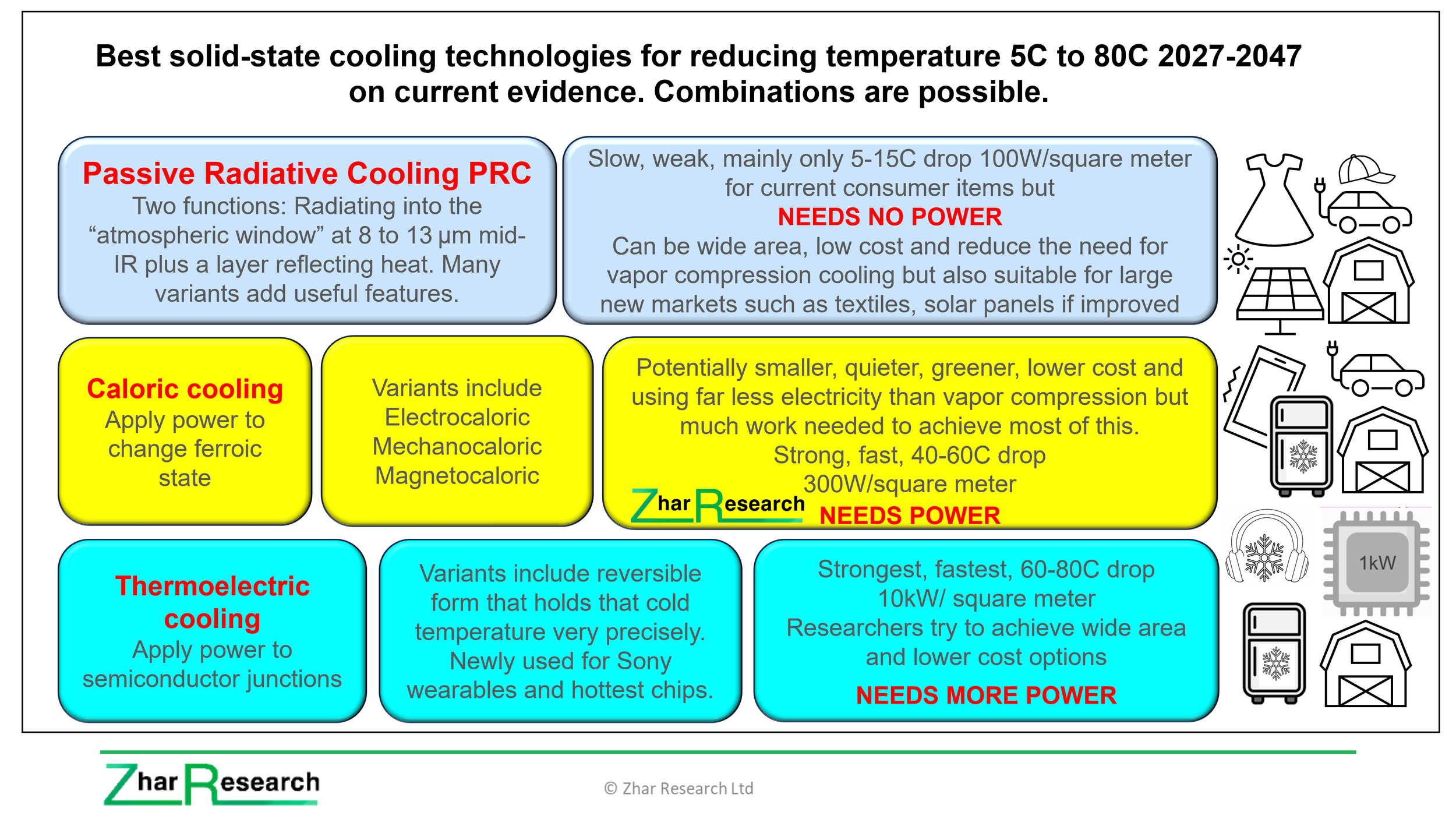
Join the surge in passive radiative cooling by reading the latest, most thorough report on the subject. This commercially-oriented 338-page report is Zhar Research “Passive Radiative Cooling, PRC, PDRC, Variants: Technology, Markets 2027-2047”. It assists all in the emerging value chain, particularly intending materials and device suppliers, product and system integrators and investors. Its seven chapters include 6 SWOT appraisals, roadmaps, 30 forecast lines and 31 new infograms.
Ideal time to participate
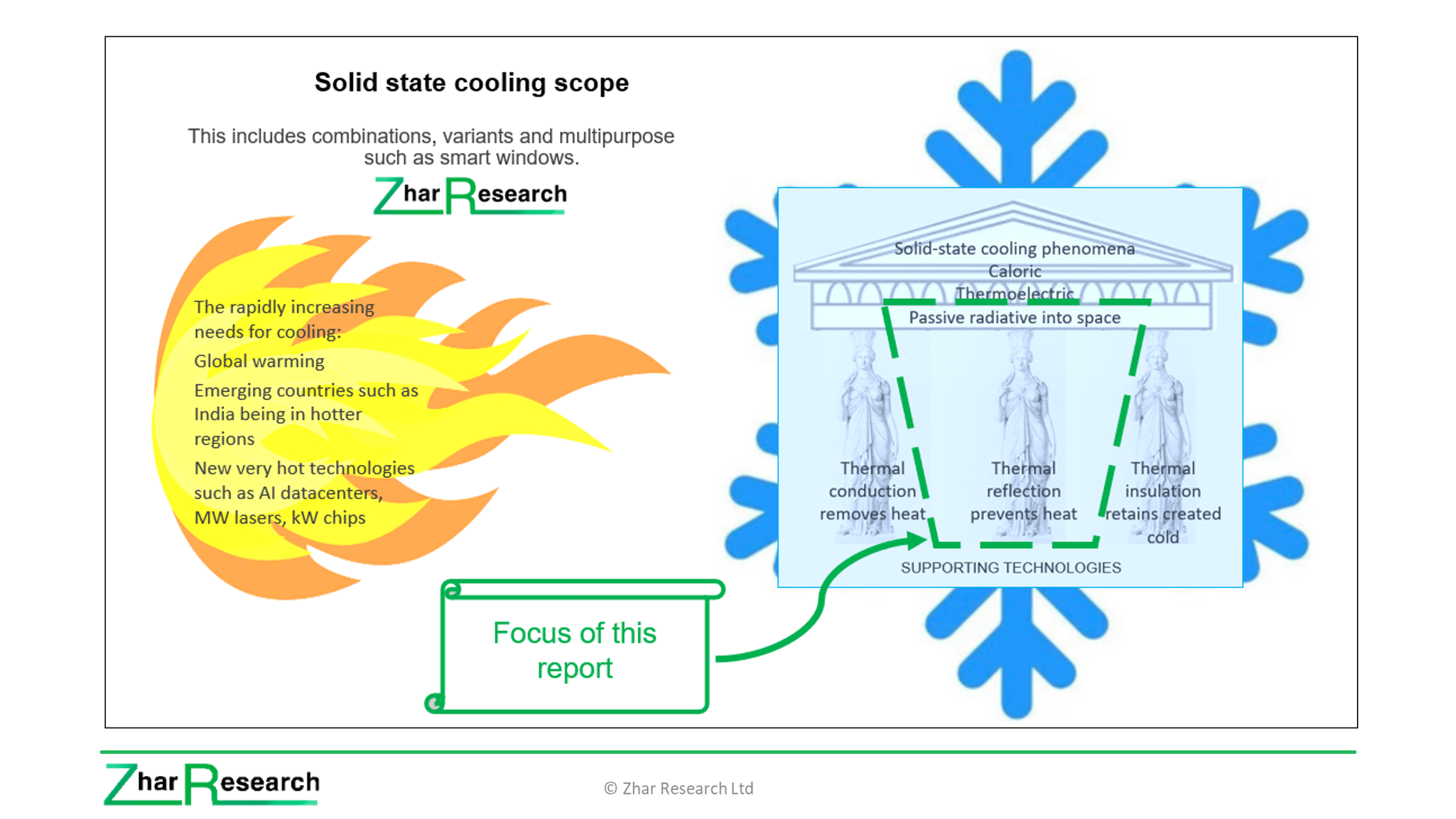
The authors provide PhD level analysis. Vitally, that includes your opportunities from the major research and company advances through 2026. The primary author writes from a background of creating several successful companies. His research finds an $18 billion market arriving over the next 20 years from very little today. Your participation is urgently needed to cope with global warming, new, very hot technologies like AI datacenters and emerging countries such as India being in hotter regions. Learn how, recently, PRC has been boosted by major technical advances, volume 3M products and PRC paint from Japan and elsewhere. Who should you partner with, or buy? Why is there a big emerging opportunity for your added-value materials such as composites and metamaterials?
Exceptional new detail and insights
The Executive Summary and Conclusions (43 pages) is complete for those with limited time. See basics, winning materials, company analysis, 24 primary conclusions, most SWOT appraisals, then roadmaps and all the forecasts 2027-2047. The Introduction (35 pages) then explains the many needs arriving to demand solid-state cooling including PRC and combinations. See the big picture such as the trend to smart materials including textiles and your opportunity to replace undesirable materials. Many new infograms and tables pull this together including one giving twelve solid-state cooling operating principles compared by 10 capabilities.
Very broad potential
Chapter 3. Passive Radiative Cooling (PRC)/ Passive Daylight Radiative Cooling (PDRC) and Allied Topics takes 92 pages because it includes explanation in detail of the major advances in 2025 and 2026. See your new materials and device opportunities. Learn how PRC has very broad potential reducing the need for vapor compression cooling but also beyond that. Here are many new pie charts and SWOT appraisals.
Your potential partners, acquisitions and tools to leapfrog
Chapter 4. Twelve Companies Commercialising PRC (37 pages) supports this including profiles of their PRC activity and a listing of solid-state cooling companies considering adding PRC to their portfolios. For example, 3M™ Passive Radiative Cooling Film (PRCF) is a PRC material that cools surfaces without electricity. It works 24/7 by reflecting 94% of sunlight and sending trapped heat into the cold upper atmosphere. This lowers surface temperatures and saves 10-20% on HVAC energy costs. Datacenter roofing is one beneficiary. See how you can compete with next technologies or focus on high-profit other markets, for instance with PRC paint or textiles or the advances in Chapter 5. PRC Variants: Janus and Anti-Stokes Cooling, Adaptive and Tunable Options (16 pages). This explains related technologies that overcome PRC limitations, with some initial commercialisation reported.
Metamaterial opportunities
Chapter 6. Enabling Technology: Metamaterial Cooling Materials and Devices (70 pages) shows how these mainly support PRC with something beyond simple thermal conduction or insulation. Understand the benefits such as transparency, efficiency and compactness and what comes next. This virtuosity extends to smart windows and greenhouses, cooling buildings and devices including solar panels. Metamaterial PRC textiles have initial commercialisation. Eight important 2026 research papers examined are just a part of this.
Chapter 7. Manufacturing technologies for PRC (26 pages, closes the report, again with much 2026 progress and intentions analysed. Zhar Research report, “Passive Radiative Cooling, PRC, PDRC, Variants: Technology, Markets 2027-2047” is constantly updated so you always get the latest with unique interpretation and insights unobtainable elsewhere. If you require a report on all solid-state cooling technologies, there is the Zhar Research report, “Solid State Cooling Materials, Systems: Passive Radiative, PDRC, Caloric, Thermoelectric, Metamaterial, Conductor, Multimode, Multipurpose: Markets, Technology 2027-2047”.