

 Image 1 of 2
 Image 2 of 2
Sample Pages
Contents List
-
1.1 Purpose and layout of this report
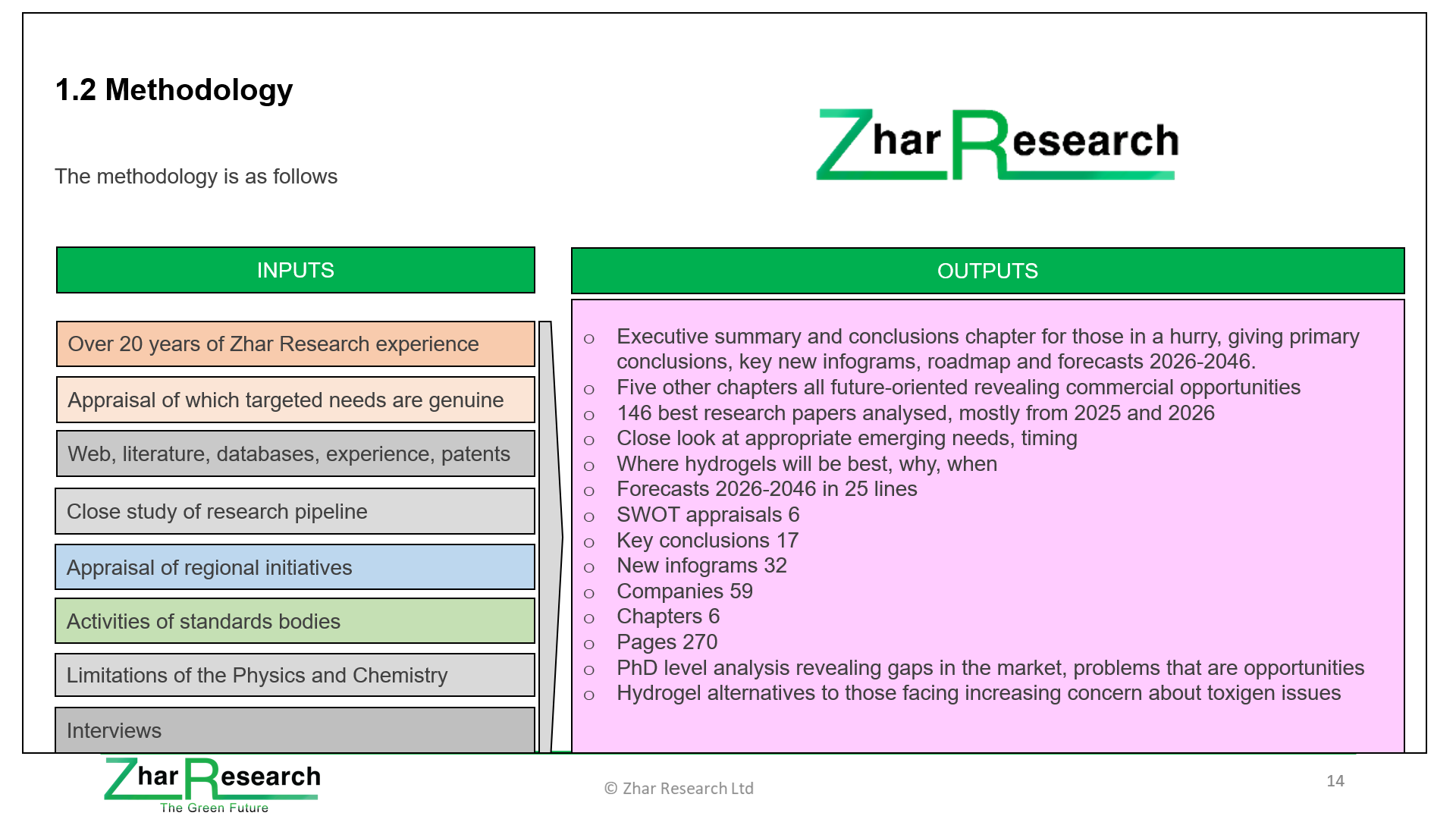
1.2 Methodology
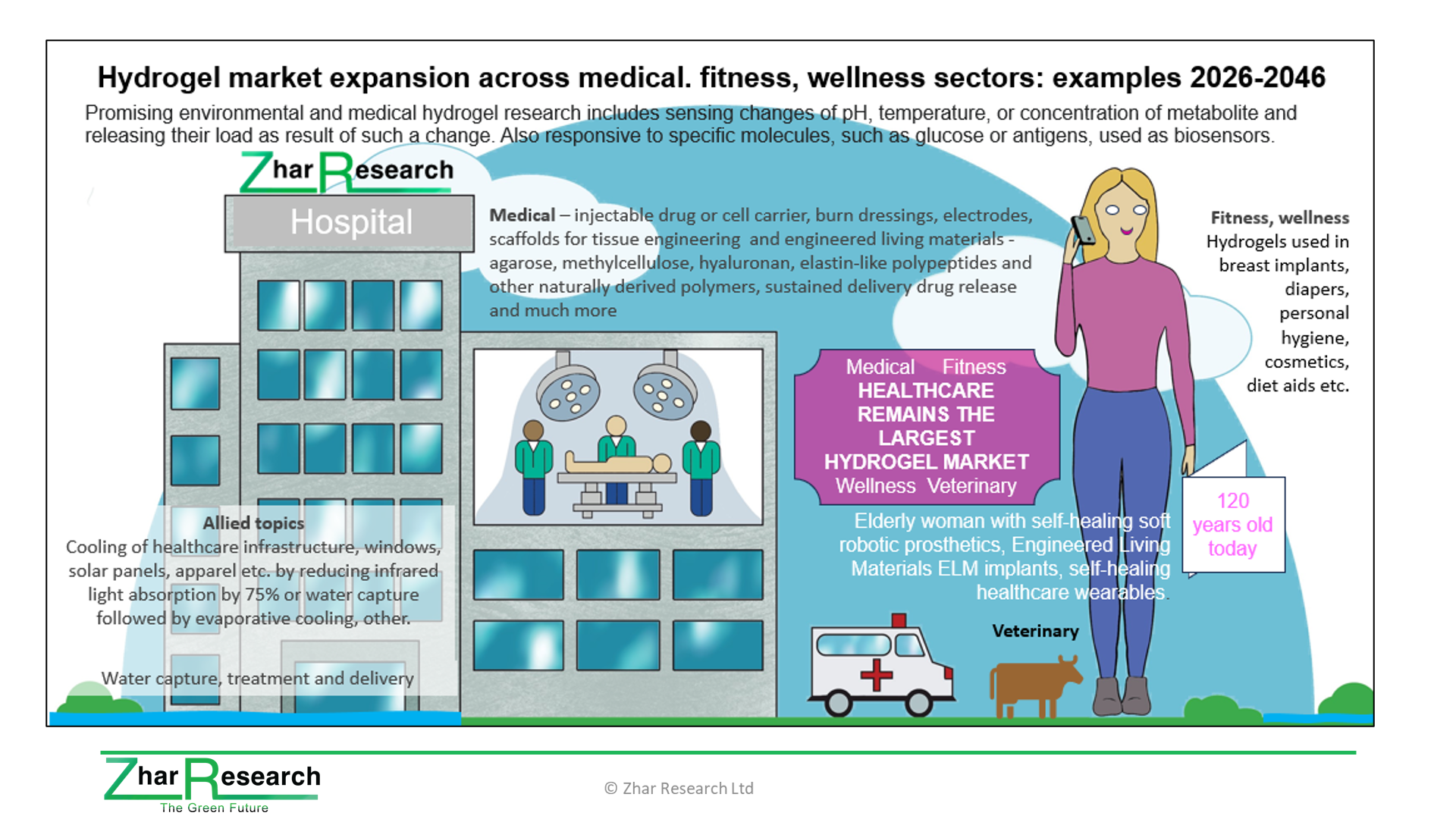
1.3 Infogram: hydrogel market expansion across medical. fitness, wellness sectors 2025-2045
1.4 Hydrogel definition and biomedical usefulness with two infograms
1.5 Usefulness, context, routes to improvement
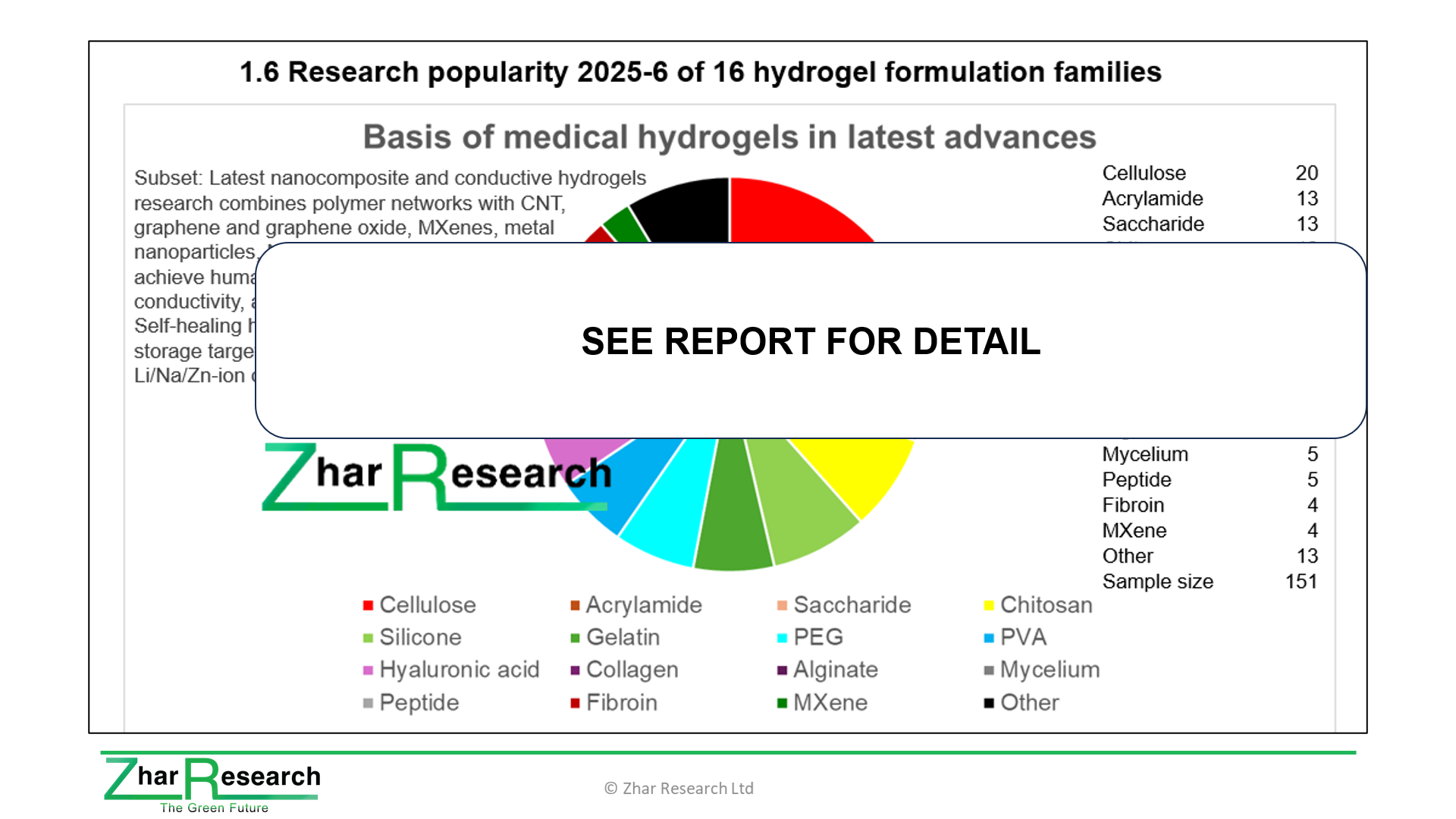
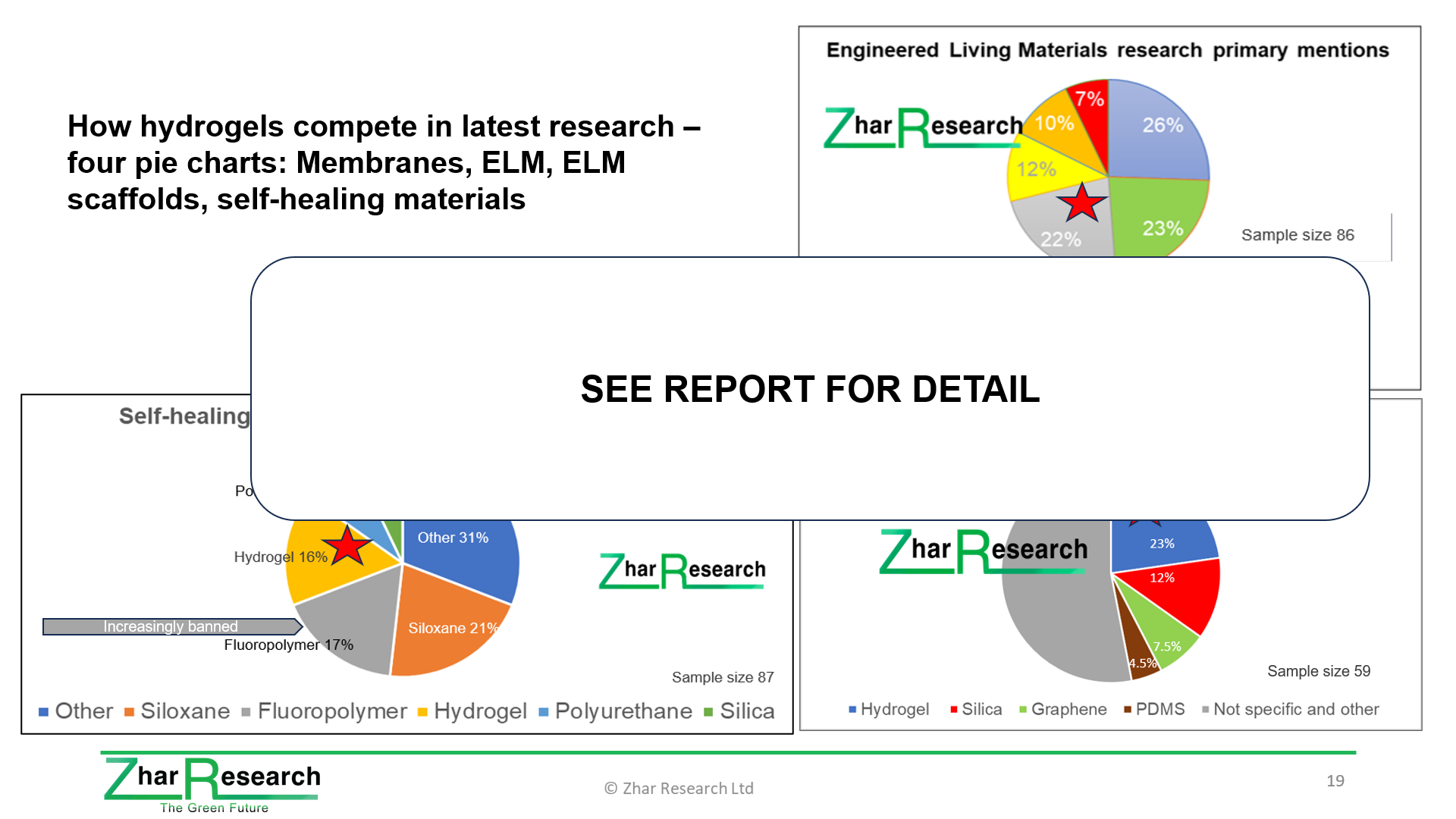
1.6 Research popularity 2025-6 of 16 hydrogel formulation families
1.7 Seventeen primary conclusions
1.8 How hydrogel toxigens are an issue and an opportunity
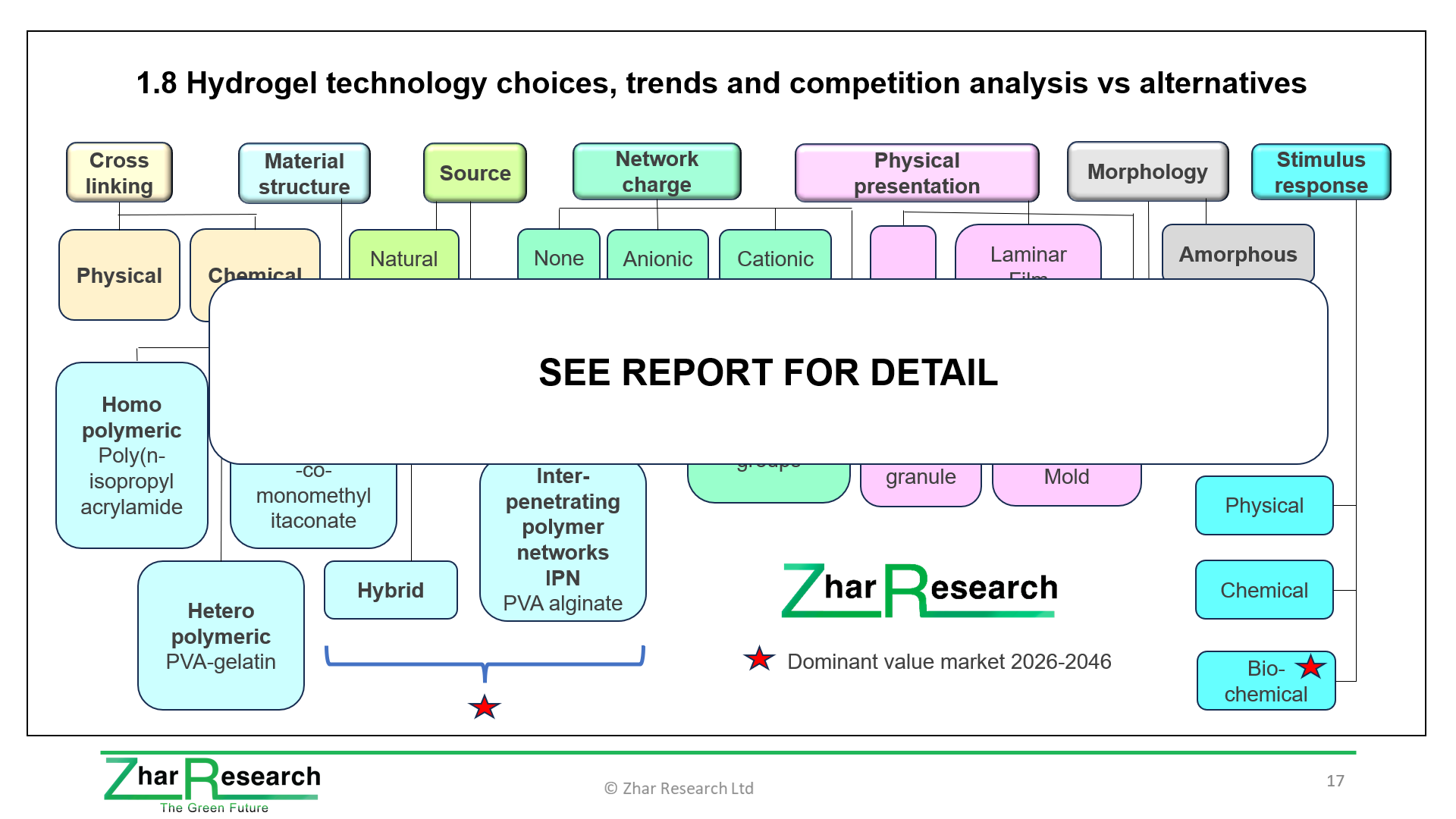
1.9 Hydrogel technology choices, trends and competition analysis vs alternatives
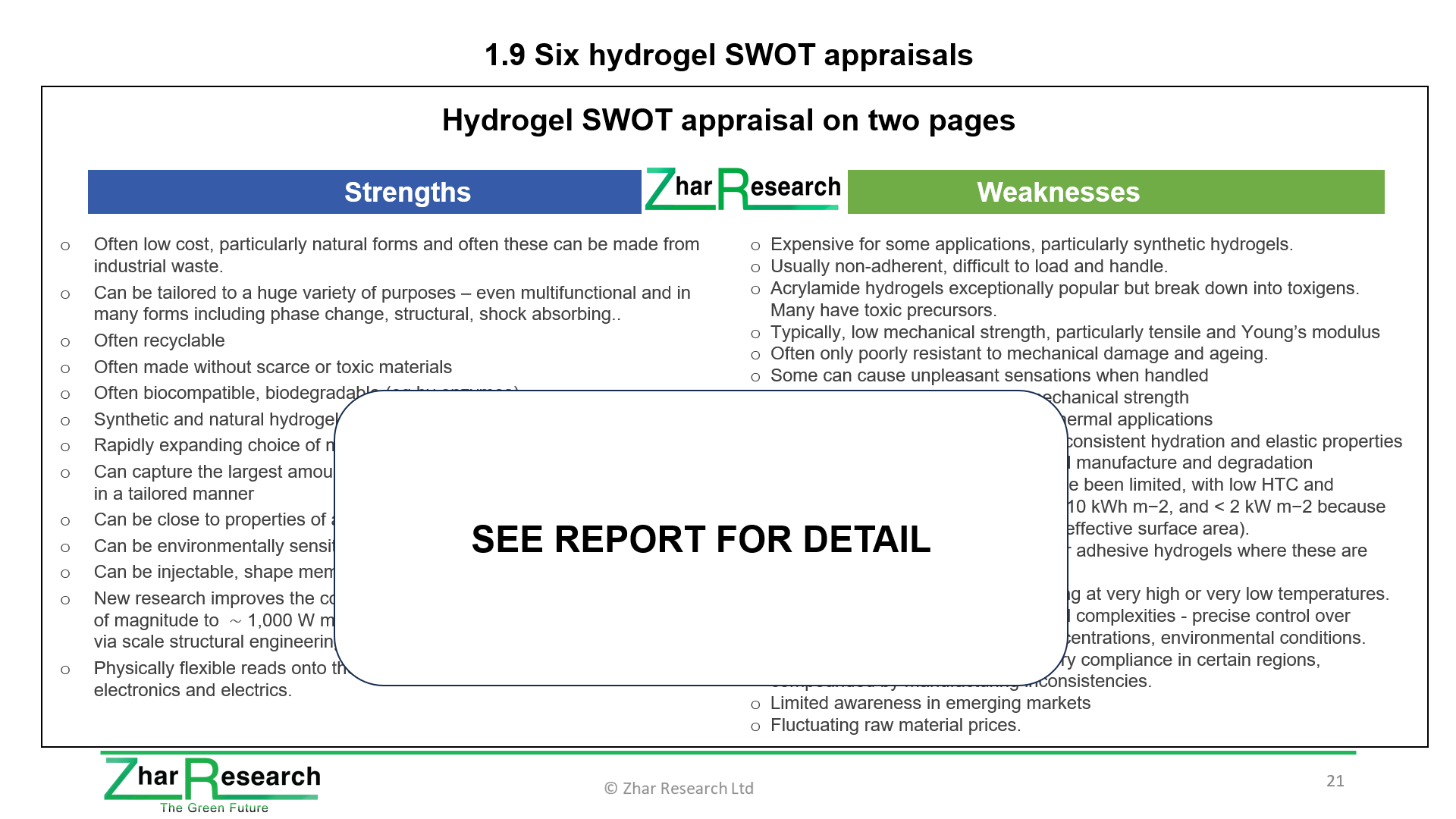
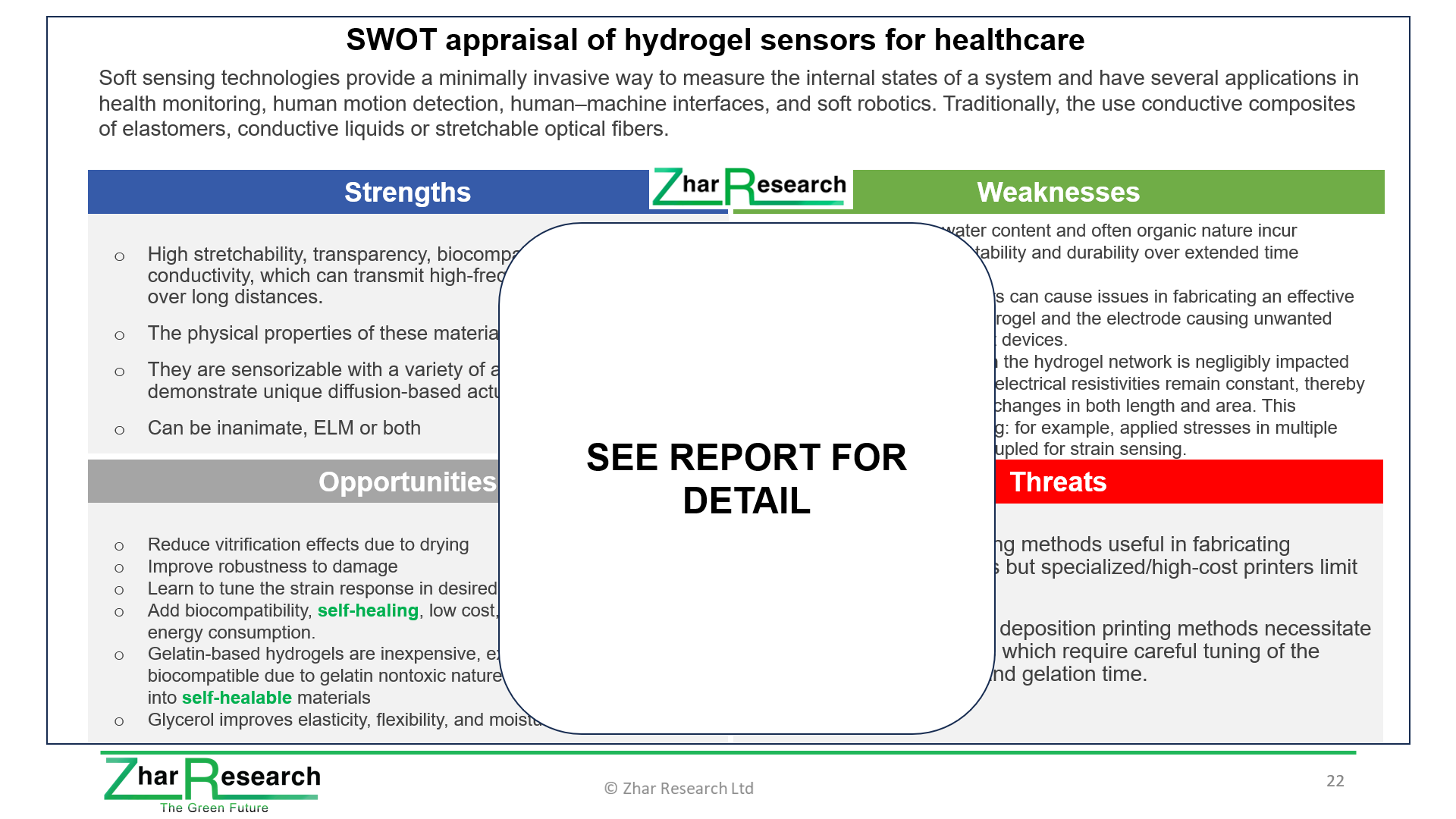
1.10 Six hydrogel SWOT appraisals
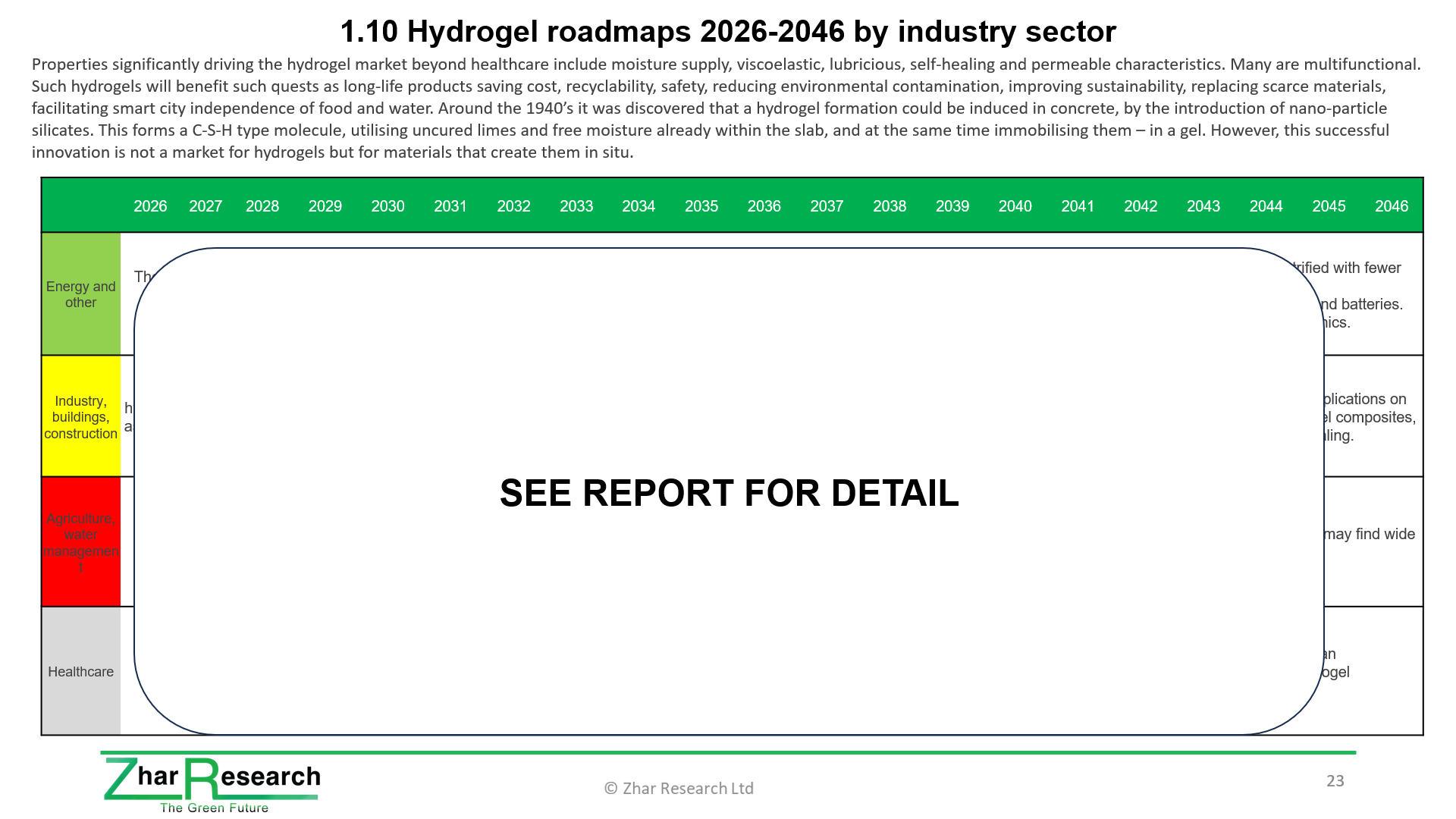
1.11 Hydrogel roadmaps 2026-2046 by industry sector
1.12 Market forecasts 2026-2046 in 26 lines
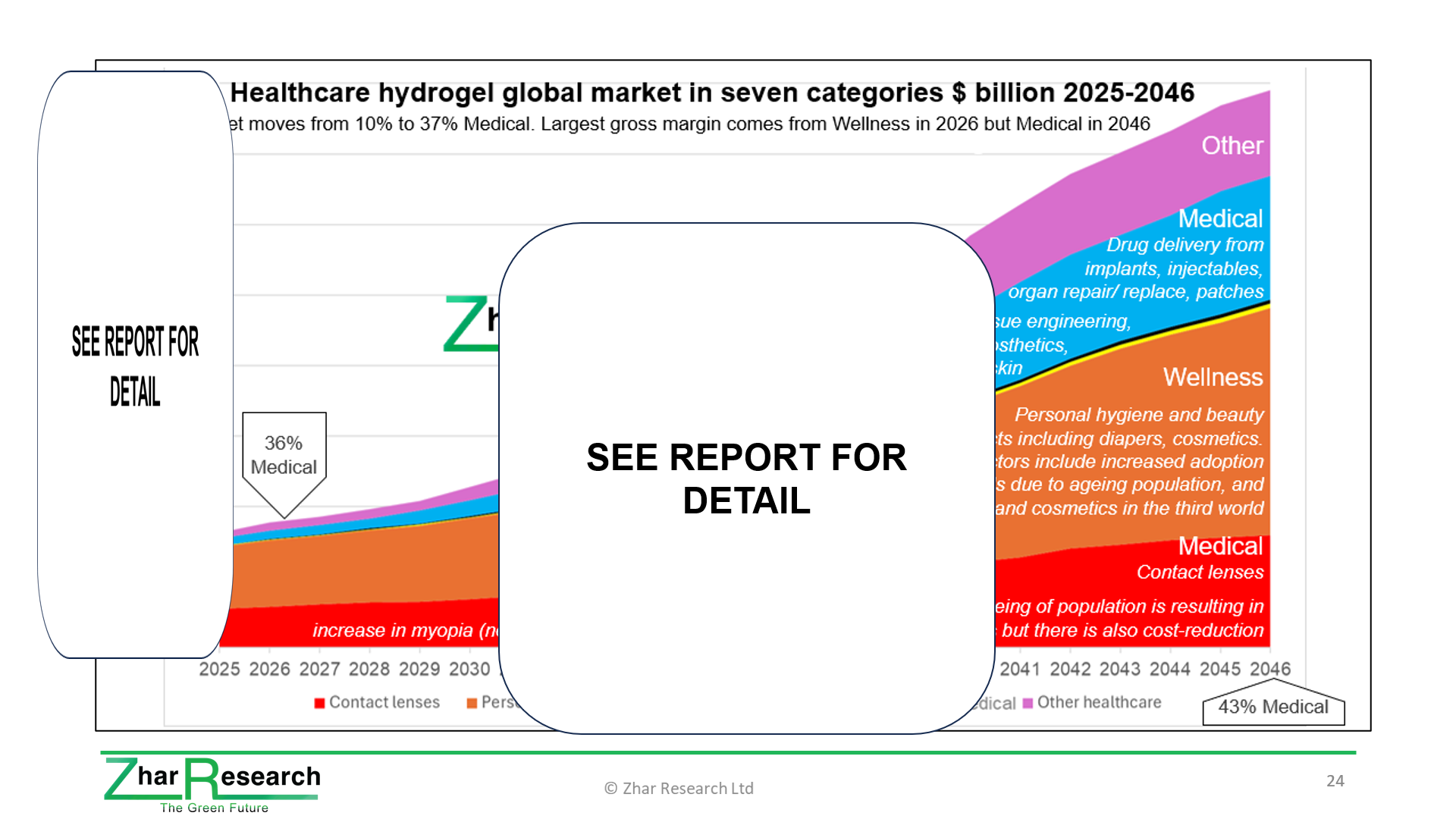
1.12.1 Healthcare hydrogel global market in seven categories $ billion: table, graph, explanation 2025-2046
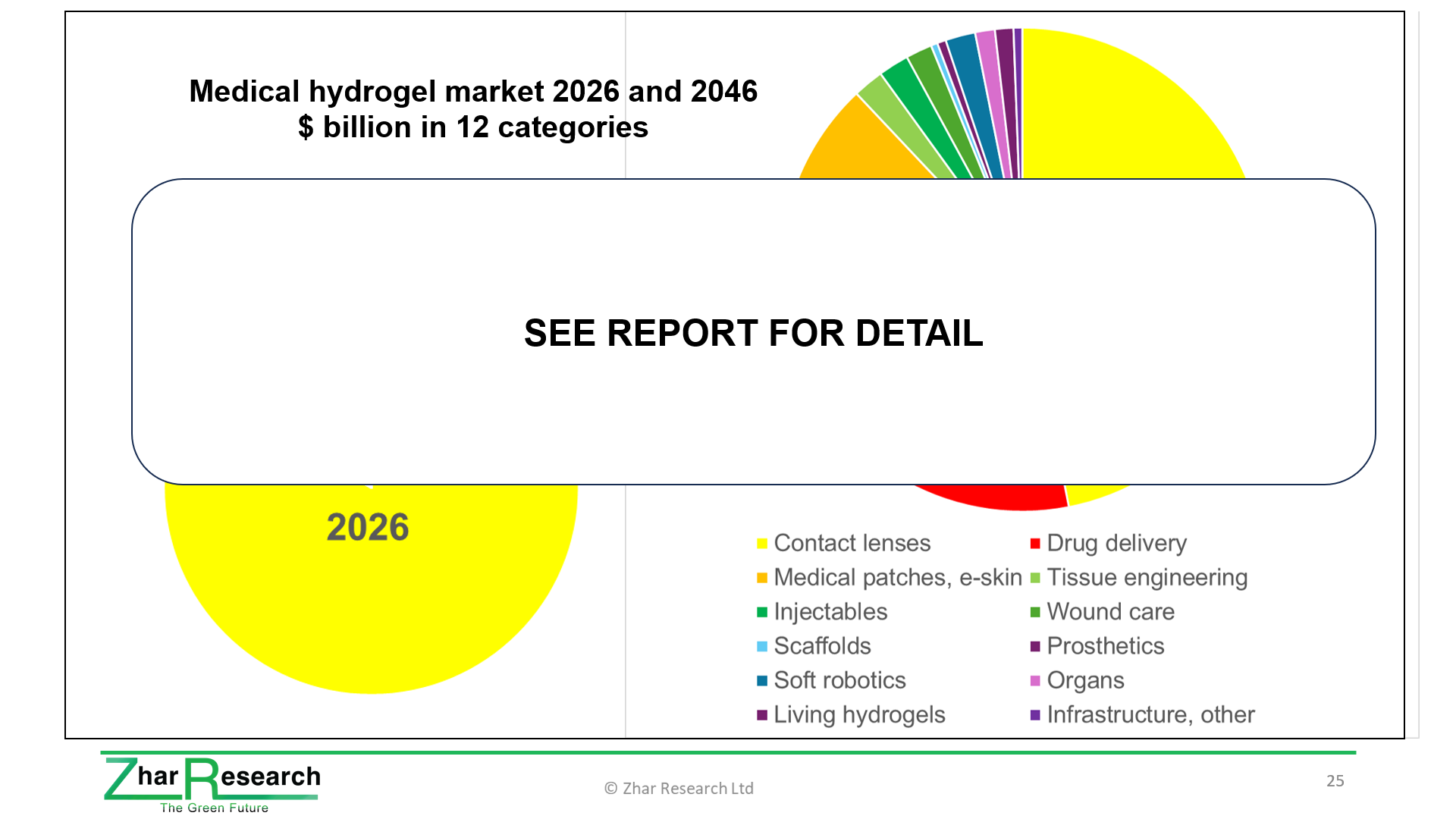
1.12.2 Medical hydrogel market 2026 and 2046 $ billion in 12 categories
1.12.3 Healthcare hydrogel value market % by four regions 2025-2046
1.12.4 Healthcare hydrogel value market: synthetic vs natural vs hybrid % 2025-2046
1.12.5 Healthcare hydrogel technology added by 5 functional categories $ billion 2025-2046
1.12.6 Cooling module global market by seven technologies $ billion 2025-2046
-
2.1 Background
2.1.1 Definition, evolution and examples
2.1.2 Many benefits
2.1.3 Market drivers
2.2 Useful approaches for hydrogel design to purpose
2.2.1 Biomimetic approach
2.2.2 Bioinspired antifouling and antibacterial hydrogels for healthcare
2.3 Beware of the term gel
2.4 Limitations
2.5 Natural vs synthetic
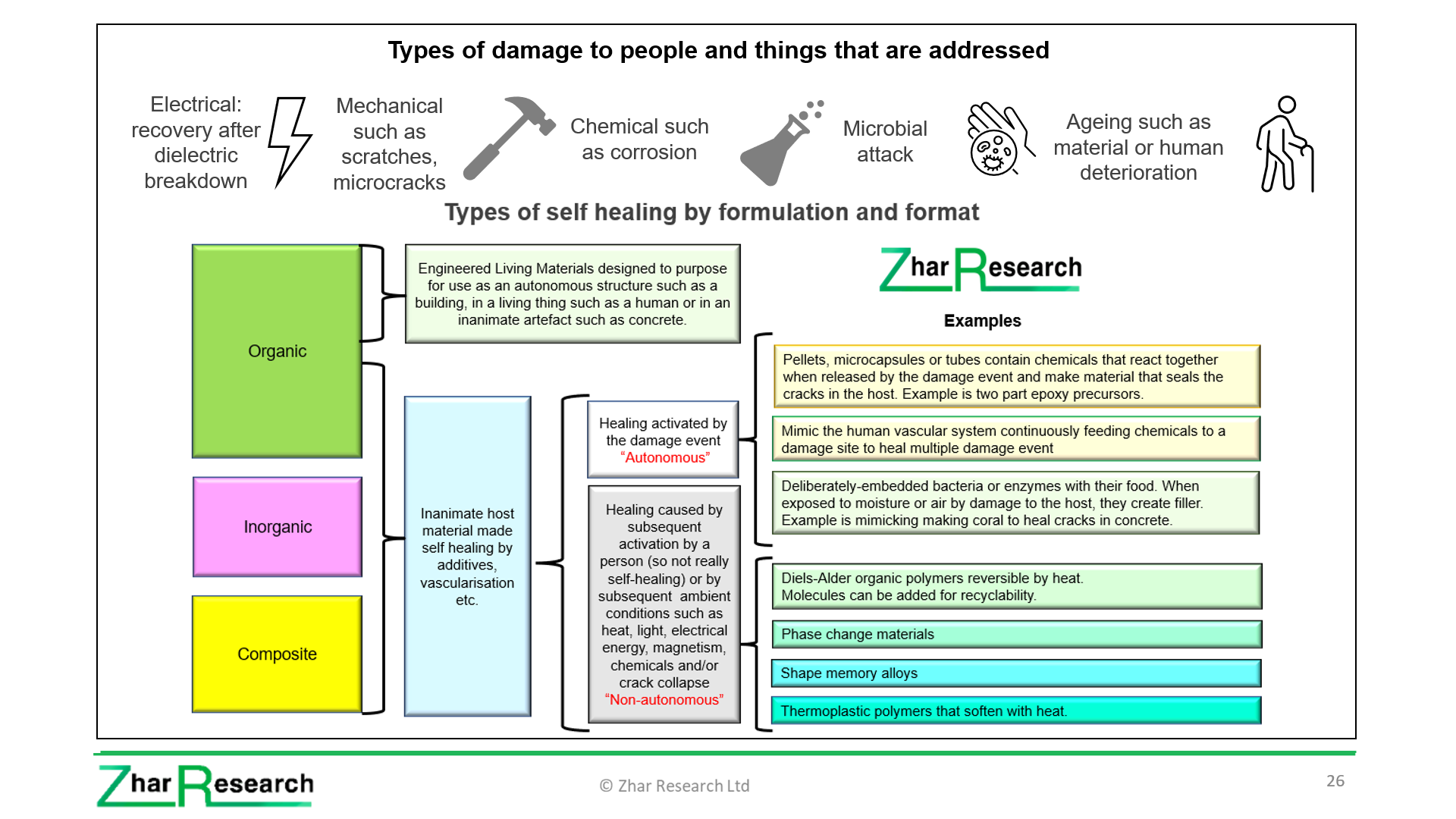
2.6 Importance of hydrogels that heal themselves
2.7 How hydrogel toxigens and toxigen intermediaries are an issue
2.8 Evolving precursors and production technologies for hydrogels including 3D and 4D printing
2.8.1 Overview
2.8.2 Examples of hydrogel precursors left, natural hydrogels right and hydrogel properties bottom
2.8.3 3D, 4D and bio-ink printing of hydrogels
2.8.4 Fabrication of a tough, long-lasting adhesive hydrogel patch
2.9 Evolving hydrogel competition: ionogels, silica gel, supramolecular gels
2.10 How silicones and polyurethanes will both compete with and combine with hydrogels
-
3.1 Overview: toolkit must rapidly widen to serve increasingly diverse needs
3.2 Infogram: hydrogel market expansion across medical. fitness, wellness sectors 2026-2046
3.3 Hydrogel molecular toolkit and trends
3.4 Hydrogel technology choices in detail with examples and trends
3.5 Six families of emerging hydrogel chemistry and functionality
3.6 Hydrogel enabling technology by seven categories
3.7 Biomimetic, composite and chemistry routes to medical hydrogel improvement
3.8 Hydrogel membranes for kidney dialysis and other purposes
3.9 Hydrogel SWOT appraisal – where we are now
-
4.1 Increasing range of properties needed from medical hydrogels
4.2 Hydrogel competition in achieving desired parameters
4.3 Popular chemical choices achieving some of the various parameters
4.3.1 Evaporative cooling.
4.3.2 Biocompatibility and biodegradable example: peptide hydrogels
4.3.3 pH and other responsive delivery
4.3.4 Tailored mechanical properties
4.4 Important hydrogel research advances by medically-useful parameter 2025 and 2026
4.4.1 Biocompatible
4.4.2 Biodegradable
4.4.3 Drug delivery
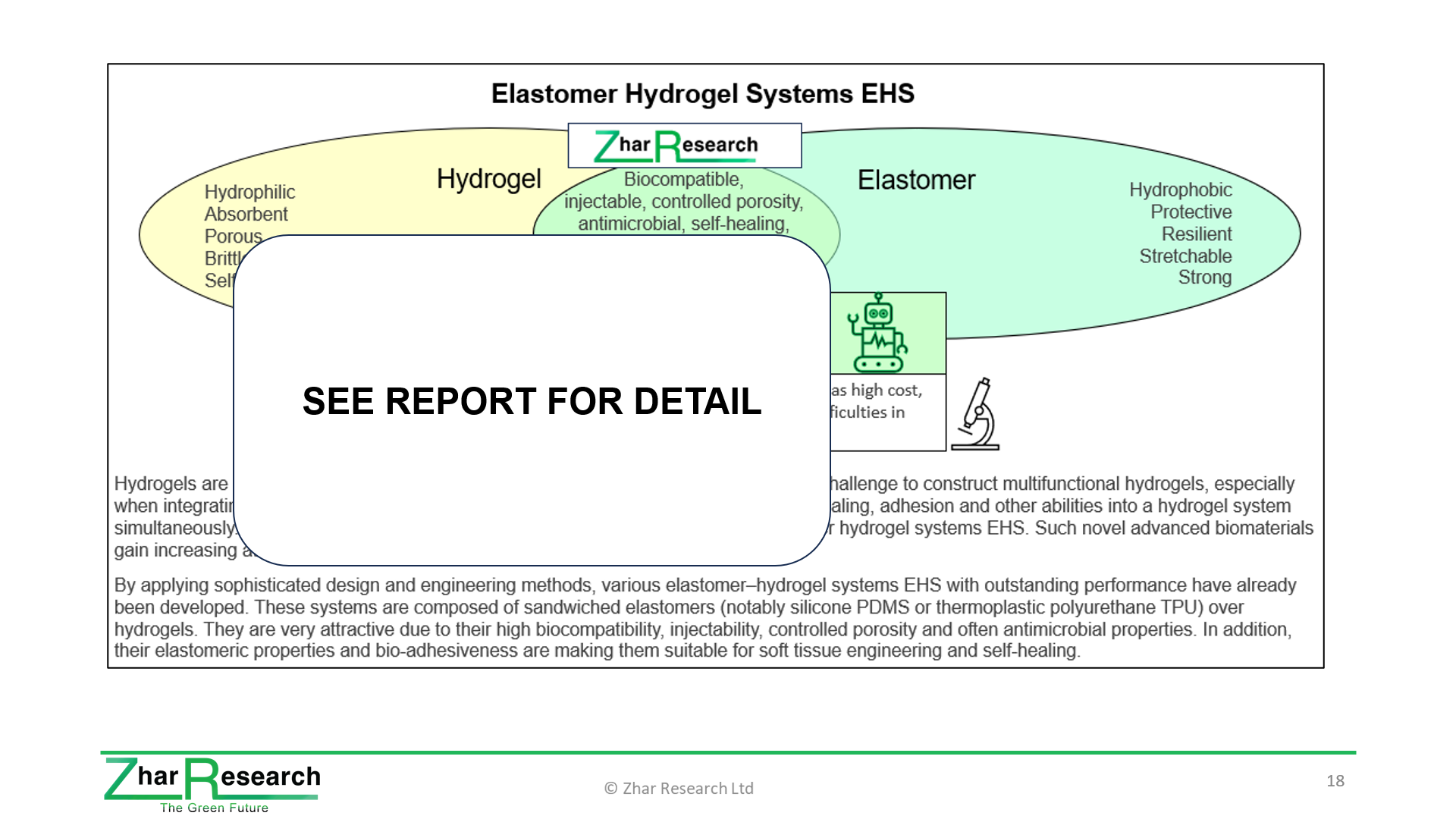
4.4.4 Elastomer Hydrogel Systems EHS
4.4.5 Flexible
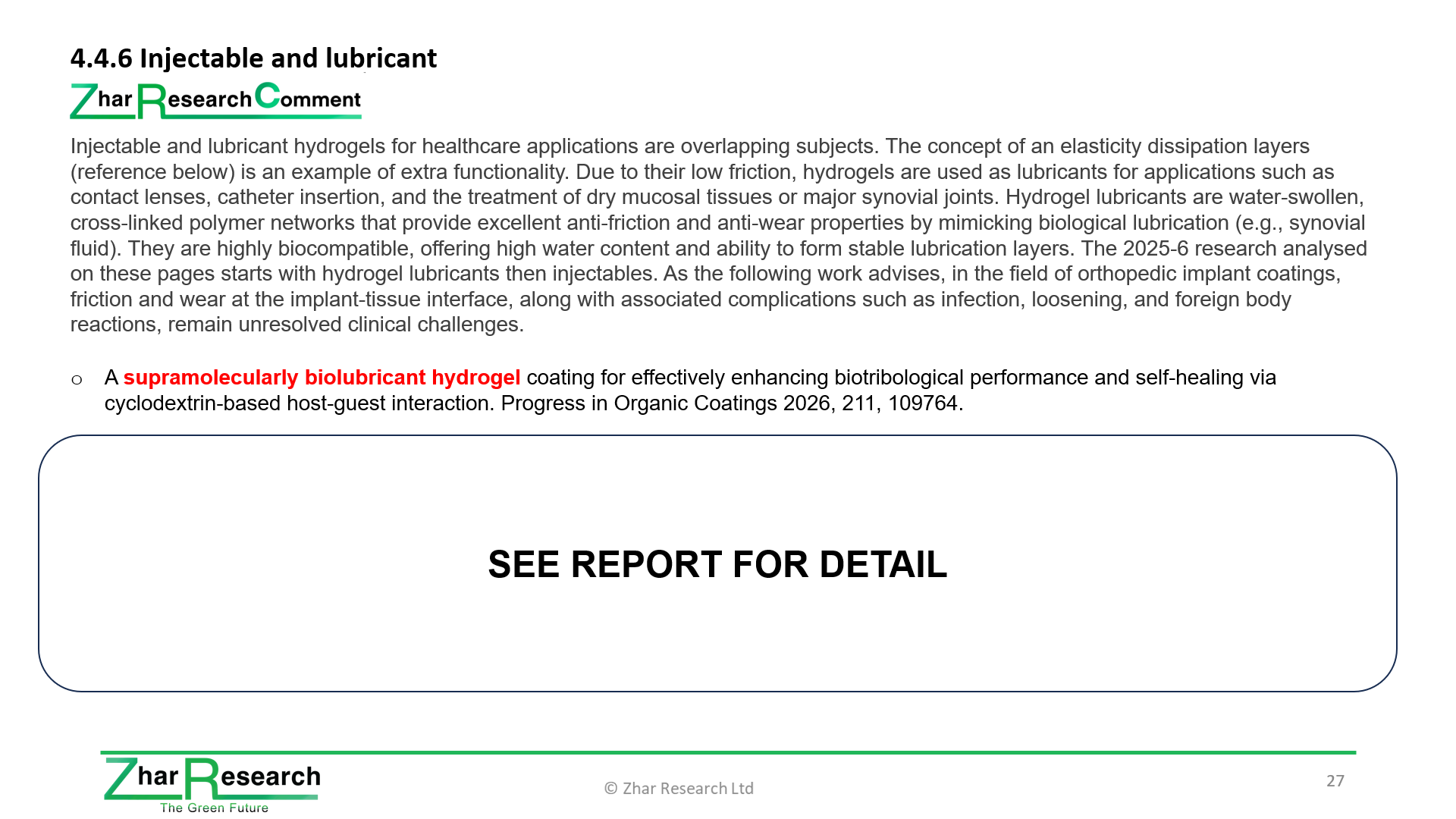
4.4.6 Injectable and lubricant
4.4.7 Medication monitoring
4.4.8 pH-responsive
4.4.9 Printable
4.4.10 Scaffold
4.4.11 Self-adhesive
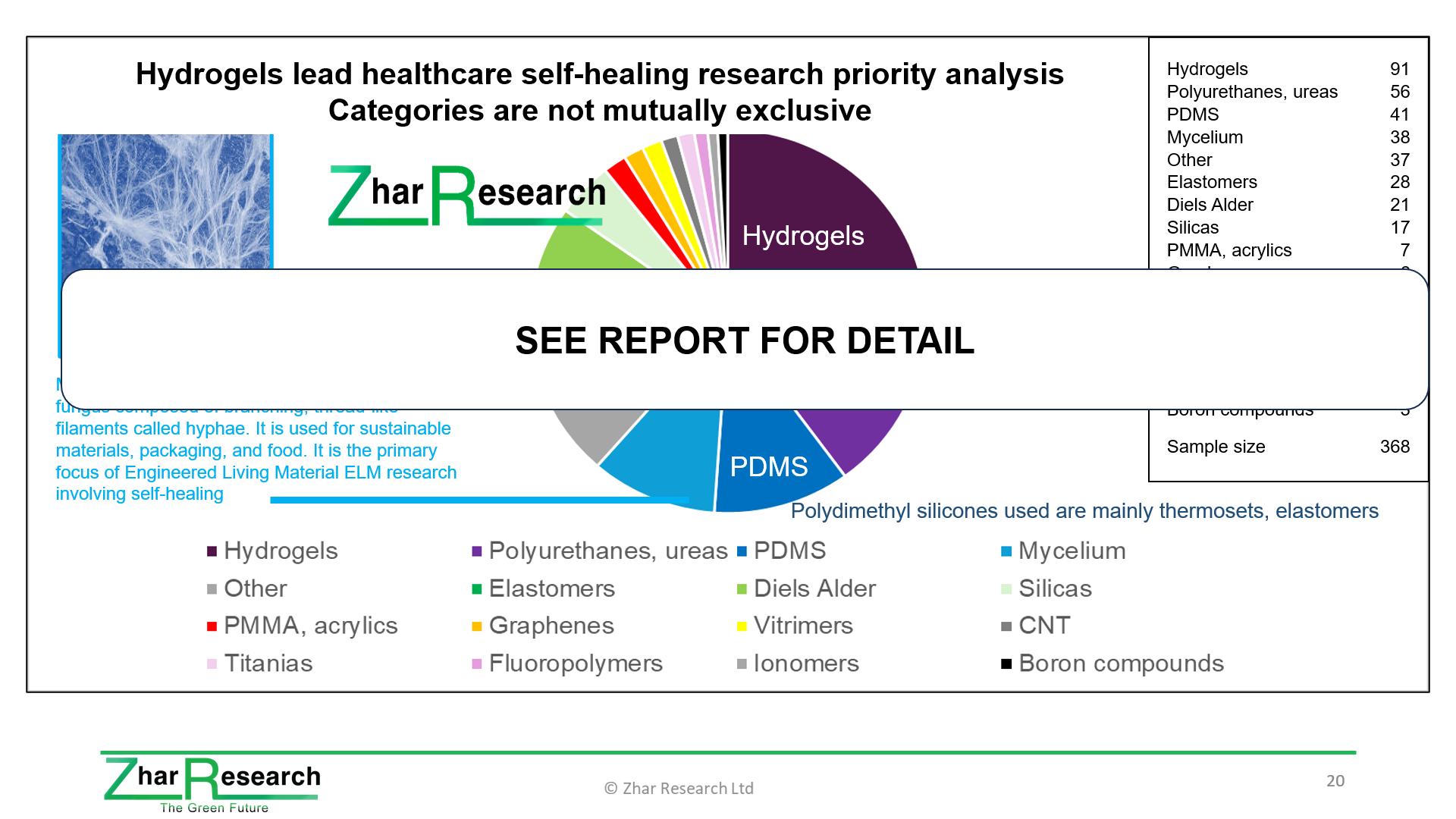
4.4.12 Self-healing with materials analysis and SWOT
4.4.13 Self-powered for therapy
4.4.14 Sensing with SWOT appraisal
4.4.15 Shape memory
4.4.16 Stimuli responsive
4.4.17 Stretchable
4.4.18 Strong, tough or hard
4.4.19 Transparent
-
5.1 Overview
5.2 ELM SWOT appraisal
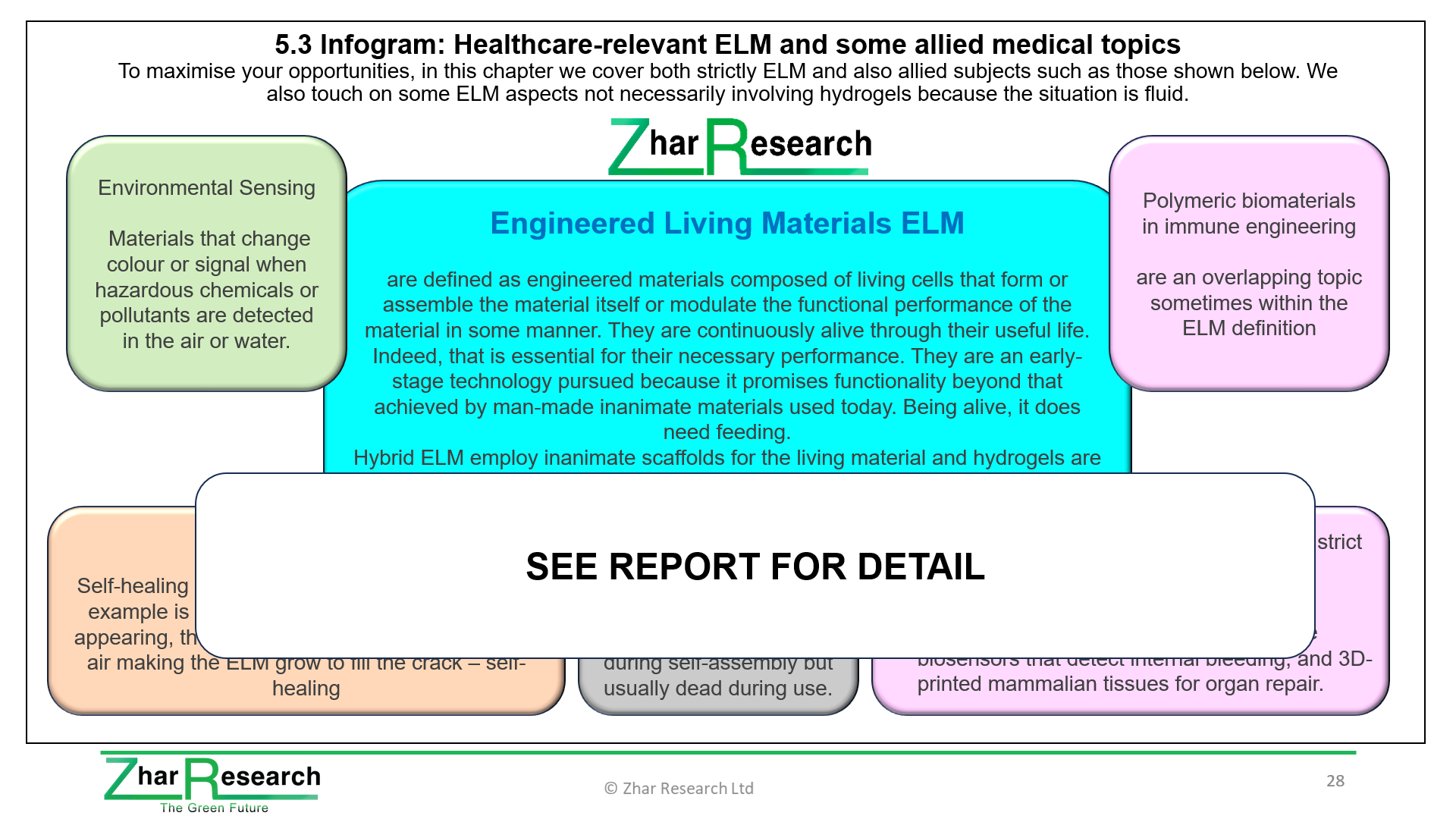
5.3 Infogram: Healthcare-relevant ELM and some allied medical topics
5.4 Infograms: Structures and functions of engineered living materials
5.5 Technologies and materials opportunities
5.5.1 Advanced disciplines brought to bear
5.5.2 Learning from nature and importance of fungal cells
5.5.3 Hybrid ELM materials with latest research success analysis
5.6 Self-healing ELM in 2026 with 19 examples of living hydrogels
5.7 Four stages of ELM creation and deployment
5.8 Hydrogel platforms for engineered live biotherapeutics in 2026
5.9 DNA hydrogels for oncology and other healthcare applications in 2026
5.10 Assisting human healing and immune engineering with biological materials in 2026
5.11 Other relevant ELM research in 2025-6
5.12 Obstacles and the way forward
-
6.1 Overview
6.2 Major advances in hydrogel treatments by condition primarily in 2025-6
6.2.1 Blindness prevention: corneal protection and restoration, retinal repair
6.2.2 Bone regeneration and other biomedical implants
6.2.3 Brain injury treatment, brain tumors, neural implants, brain-computer interface
6.2.4 Breast tumor treatment
6.2.5 Burn recovery
6.2.6 Cardiac surgery
6.2.7 Contact lenses
6.2.8 Crohn’s disease
6.2.9 Diabetic complications
6.2.10 Disability support
6.2.11 Inflammation oral
6.2.12 Neuromodulation
6.2.13 Osteoarthritis mitigation
6.2.14 Regenerative medicine
6.2.15 Scar repair
6.2.16 Skin rejuvenation
6.2.17 Spinal cord implants for treating paralysis
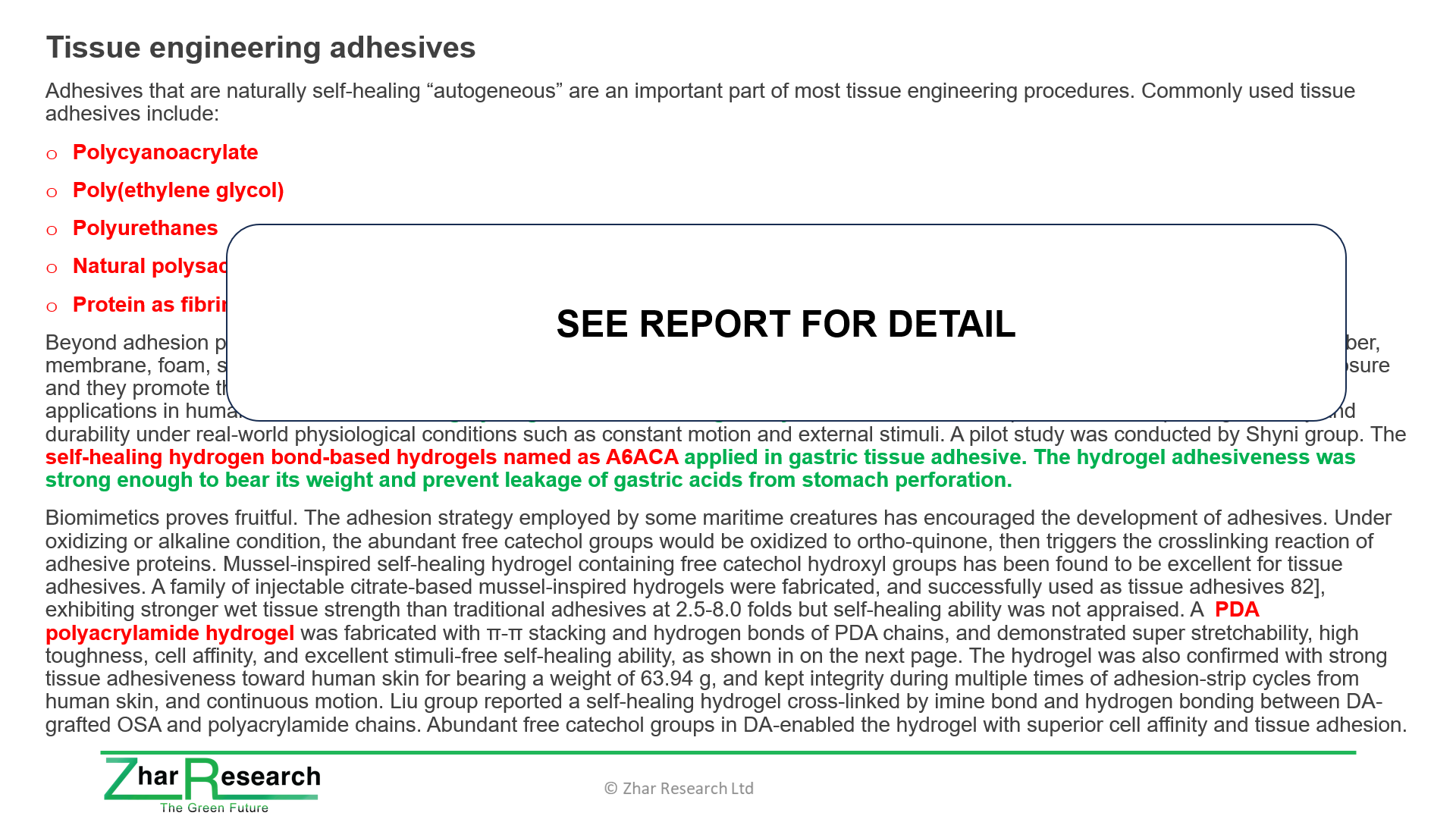
6.2.18 Tissue engineering: cell transplantation, organ replacement, skin, periodontal, adhesives
6.2.19 Wound healing: future dressings, injectables, other
The healthcare hydrogel market increases fivefold to $158 billion in 2046. Its medical sector is surging from 36% to 43% of value sales and becoming the majority of market gross margin. Time for a report that concentrates less on diapers and cosmetics and more on hydrogels making the blind see, the paralysed walk, organs replaced and cancers overcome. See the Zhar Research report, “Medical and Allied Hydrogels: Markets, Technologies 2026-2046”. Written in 2026, it is constantly updated so you are not misled by old information in this fast-moving field.
Clarity for companies seeking business
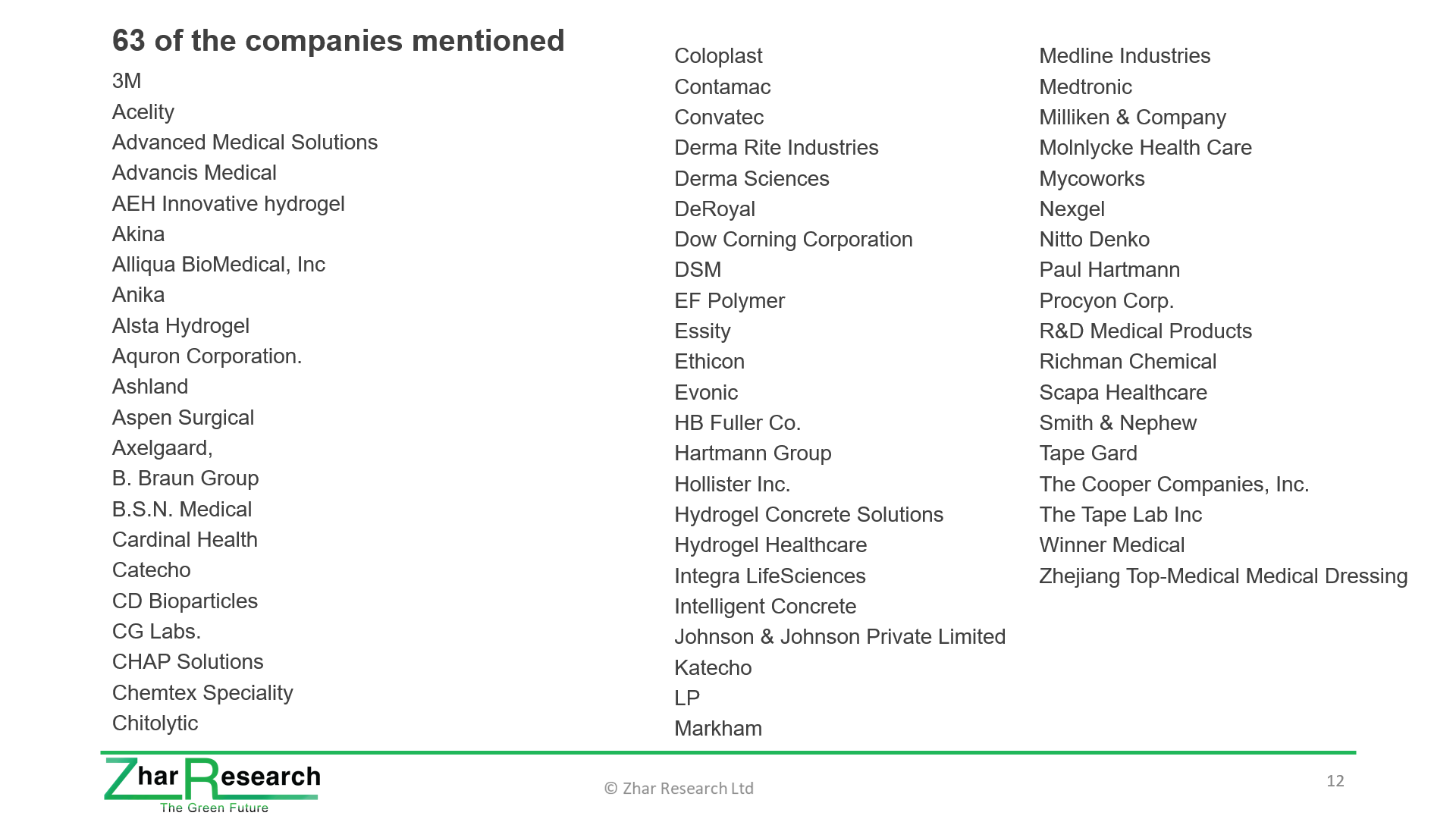
Commercially-oriented, this 270-page report has forecasts 2026-2046 in 25 lines, 63 companies mentioned, 32 new infograms, 17 key conclusions, six chapters, six SWOT appraisals. The PhD level analysis, mostly of the flood of advances in 2025 and 2026, reveals challenges such as toxic materials and inadequate aspects of performance that are your opportunities.
Quick read
The Executive Summary and Conclusions (33 pages) is for those in a hurry, giving definitions, scope, new infograms, materials analysis pie charts, the key conclusions, six SWOT appraisals, the roadmaps and all forecasts 2026-2046 with explanations.
Context
The Introduction (26 pages) gives definitions, context such as benefits, market drivers, biomimetics and useful approaches for hydrogel design-to-purpose. In a balanced approach, there are cautions too, such as care needed with terms such as gel, and some ongoing inadequacy in life and robustness in some applications. In every chapter, see identification and assessment of leading materials and hardware mostly in 2025-6 research advances referenced and discussed. Learn evolving precursors and production technologies for hydrogels including 3D and 4D printing. Understand evolving hydrogel competition with polyurethanes and silicones both being constituents of some hydrogels but also sometimes their competition.
Unbiassed analysis of the latest advances
Chapter 3. Hydrogel Toolkit for Healthcare: General Situation (27 pages) gives the big picture mainly in new infograms. Learn how it will rapidly widen to serve increasingly diverse needs and see a landscape of hydrogel market expansion across medical. fitness, wellness sectors 2026-2046. A box diagram gives hydrogel technology choices in detail with examples and trends with future winners identified. Infograms of ten families of emerging medical hydrogel chemistry and functionality show functional and other families with many research papers from 2025 and 2026 showing progress. Enabling technologies, routes to improvement and competition for membranes and other structures are introduced then comes a dense two-page hydrogel SWOT appraisal. Throughout the report, the key compounds are highlighted in red and the key points in green so you can easily identify your materials and applicational opportunities.
Chapter 4. Hydrogel Toolkit for Healthcare: Inanimate Materials, Emerging Functions 2026-2046 (71 pages) delves much deeper into this, the largest commercial opportunity. A large number of appropriate research advances from 2025-6 are explained with references. See two SWOT appraisals. A pie chart of 368 latest advances by material reveals how hydrogels lead healthcare self-healing materials research. 20 functions are found to be particularly in demand, usually in groups and there are subsections on all of them. An infogram clarifies Elastomer Hydrogel Systems. Understand injectable hydrogels and others advancing in 2026. See multifunctional hydrogel interfaces: transforming flexible electronics and also the latest elastomer-crosslinked hybrid hydrogels with co-constructed hydrophobic–hydrophilic networks for electronic skin. Understand advances in neural tissue engineering and progress with a supramolecularly biolubricant hydrogel coating for effectively enhancing biotribological performance and also self-healing via cyclodextrin-based host-guest interaction. What happened at the 19th World Drug Delivery Summit, took place on January 29–30, 2026? How are hydrogel nanoparticles newly improved for drug delivery?
Living hydrogels
Living hydrogels? Engineered Living Materials ELM with hydrogel scaffolds? Definitions vary but most would agree that are organs are mostly living and the ultimate is to replace and repair them with living material that can grow, heal and strengthen in a similar manner. Chapter 5. Engineered Living Materials ELM describes these and allied options such as DNA hydrogels for oncology and hydrogel-aided structures grown to purpose but dead when then used. Its 38 pages have a SWOT, several explanatory infograms and much research analysed particularly from 2026 and 2025. One conclusion is that ELM will have serious impact in the later part of the 2026-2046 timeframe.
Heroic achievements arriving
By now, it will be abundantly clear to the reader that it is the medical part of the healthcare hydrogel market that will become dominant in gross margin 2026-2046 powered by the lion’s share of research advances and industrial initiatives. The report therefore closes with Chapter 6. Future Medical Hydrogels in Action (55 pages) – a powerful tour of advances arriving with hydrogels. They include blindness prevention, bone regeneration, biomedical implants, many forms of treatment for brain injury, breast tumors, burns, cardiac surgery, contact lenses, Crohn’s disease, diabetic complications, disability support, oral inflammation and much more even including spinal cord implants treating paralysis, tissue engineering for organ replacement, periodontal, skin regeneration and other purposes.
The report, “Medical and Allied Hydrogels: Markets, Technologies 2026-2046” is your essential reading if you are to enjoy part of the large, and increasingly high-margin market for the materials, hardware and services required.